Visualizzazione post con etichetta Samutramanthan. Mostra tutti i post

sabato 21 luglio 2018

Satyavrata tra terra e cielo


Trishanku in cielo
Il Ramayana ci narra che Satyavrata fu il terzo sovrano di Ayodhya, la città che sarà la capitale di Rama. Satyavrata era molto devoto e chiese al saggio di corte, Vasishta, di celebrare un sacrificio che gli consentisse di ascendere all'Indraloka, cioè il paradiso di Indra,  col proprio corpo mortale. 
Vasishta si rifiutò, dicendo che non era possibile e il re si rivolse allora ai figli del saggio. Questi si adirarono e maledissero Vasishta obbligandola a diventare un candala, ossia un fuori casta, e costringendolo a dodici anni di esilio. 
Durante il suo esilio si verificò una tremenda carestia e Satyavrata, grazie alle capacità acquisite durante l'esilio, sfamò la famiglia del saggio Visvamitra, grande avversario di Vasishta che aveva preso il suo posto alla corte del re.
Qua le tradizioni divergono, ma mi piace raccontare quella che narra come Satyavrata sfamasse i poveri affamati con Kamadhenu, la sacra vacca che emerse dal samutramanthanil frullamento dell'oceano e che apparteneva proprio a Vasishta.
Per questo motivo Satyavrata è conosciuto anche come Trishanku, ossia 'triplice peccatore', avendo commesso tre gravissimi peccati: rubare una vacca, ucciderla, mangiarne le carni.
Ovviamente del triplice peccato fu felicissimo Visvamitra che promise a Satyavrata di celebrare il grande sacrificio per consentirgli di salire nel paradiso di Indra col corpo mortale come lui desiderava.
I figli di Vasishta tentarono di ostacolare il sacrificio, ma Visvamitra li ridusse in cenere e lanciò contro di loro una terribile maledizione: sarebbero dovuti rinascere per settecento volte come fuoricasta.
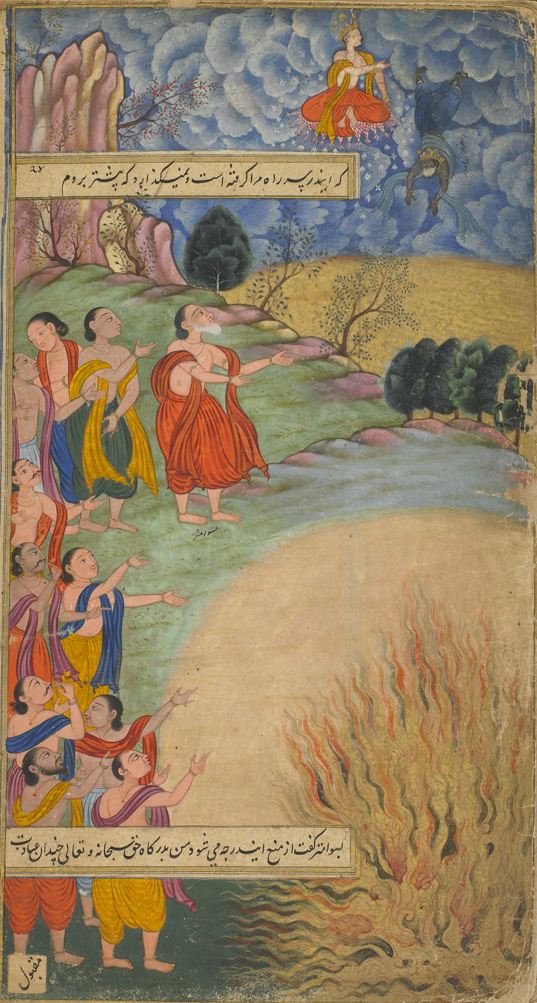
Alla fine il sacrificio venne regolarmente svolto con la partecipazione di rishi e saggi da tutta l'India e Satyavrata ascese col proprio corpo mortale fino al paradiso. Ma una volta giunto alle porte dell'Indraloka proprio Indra e gli altri dei si opposero al suo ingresso:"Non è consentito ad un corpo mortale entrare nel paradiso di Indra!"
Mentre il povero Satyavrata si trovava tra il paradiso e la terra, appeso per aria a testa in giù, nacque una grande diatriba tra gli dei e il saggio Visvamitra che andò su tutte le furie e minacciò gli dei di creare un altro paradiso, il paradiso di Trishanku, un altro Indra e altri dei in sostituzione di quelli esistenti a cominciare da Indra. 
Detto fatto, il saggio, con i grandi poteri che aveva acquisito in anni e anni di austerità e meditazione, creò una nuova costellazione e stava per creare il nuovo paradiso e, soprattutto, nuovi dei, quando Indra propose un accordo.
"La nuova costellazione può rimanere e Satyavrata può restare tra le nuove stelle, ma non entra nel paradiso e tu Visvamitra desisti dai tuoi propositi."
Visvamitra capì che non poteva tirare oltre la corda ed accettò.
Così il povero Satyavrata-Trishanku è là in cielo a testa in giù e non può nè tornare sulla terra nè accedere al paradiso.
Per questo motivo in certe zone dell'India ancora oggi, quando una persona si trova in una situazione di incertezza, si dice "sei come Trishanku" e la situazione di incertezza è detta "il paradiso di Trishanku".



sabato 9 marzo 2013

Garlic and ayurveda

For the twice-born, those who belong to the three upper castes, eating garlic is prohibited. Garlic cannot be offered to the gods, it increases libido and then it remove from the meditative detachment, is tamasic and thus causes mental torpor.
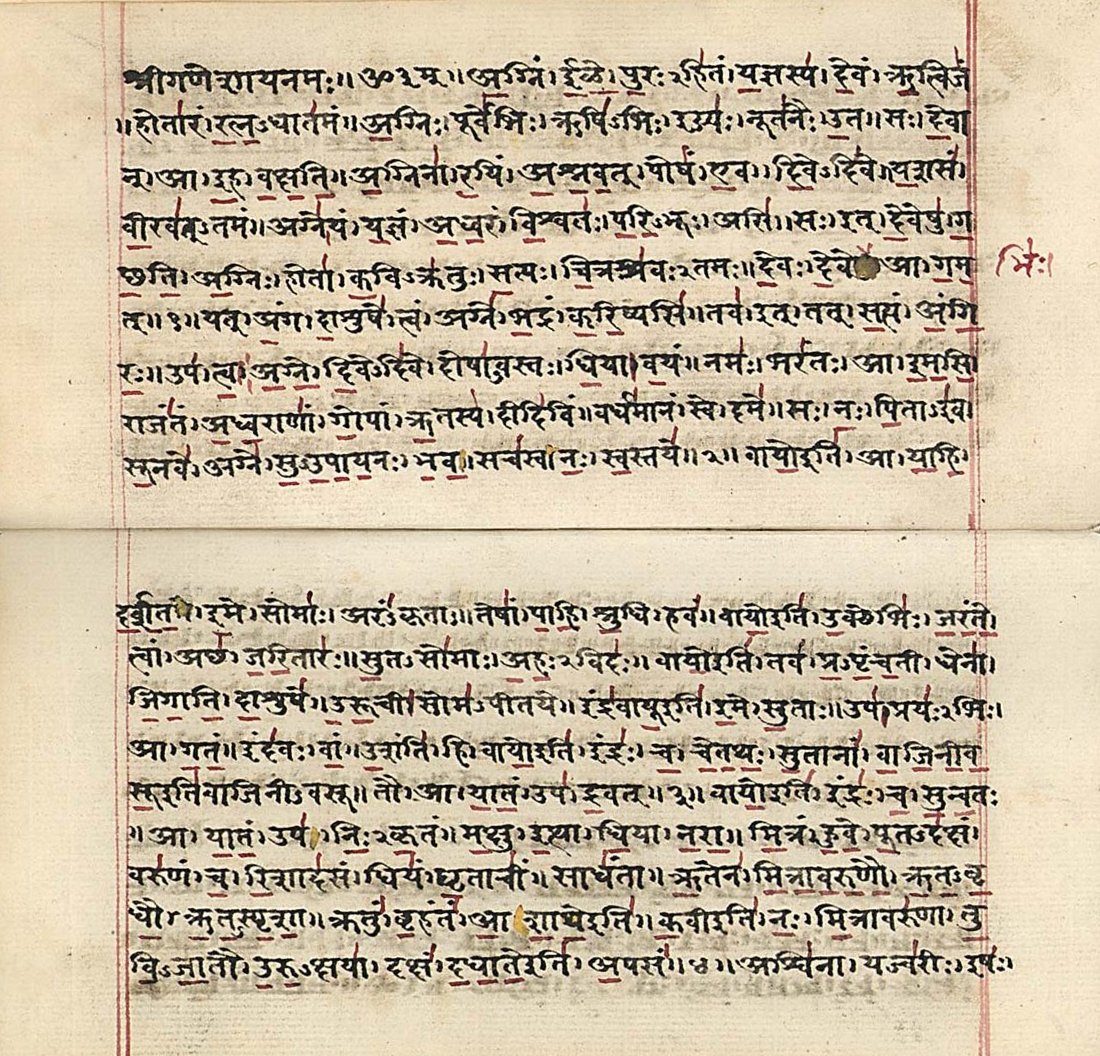
Sanskrit manuscript
The Manusmriti, the Laws of Manu, is very clear, you cannot eat neither garlic nor onion and those who do so must submit to santapana (heating vow) or yaticandrayana (the vow of ascetic course of the moon).
These two 'painful vows', the first is to drink a concoction of cow urine, dung, milk, yogurt and grass sacrificial and then remain fasting for one night. While the yaticandrayana is to eat only at midday eight mouthfuls of food offered in sacrifice to the gods.
According to legend garlic was born during the Samutramanthan, the struggle between gods and demons for the soma, the drink of the gods which gives immortality and power, which had emerged from the samutramanthan.
You will remember that the demon Rahu (click here) for a while managed to get hold of the drink and drank a bit, but Vishnu cut off cleanly the demon head. Well, a few drops of the soma fell on the ground and from there came the garlic.
For this reason, garlic is a food forbidden to the upper castes and especially to the Brahmins, because in some way derived from an animal, in this case by a demon.
Yet Ayurveda, the traditional Indian medicine, consider garlic as a powerful medicine. In fact there is even a medical treatise entirely dedicated to garlic.
Vagbhata, in his treatise on Ayurveda, remember that garlic cure fractures, cures vitiligo and leprosy, haemorrhoids, worms and urinary tract infections, coughing and palpitations, increases strength and rejuvenates.
Obviously treaties ayurvedic know the problem of impurity of garlic and also have a unusual solution to make it pure. Here it is.
You must make fast a cow for three nights, then you must feed it with compound feed for two parts of grass and for a part of garlic. After that the Brahman can drink milk and eat butter of that cow and could take garlic to cure his diseases.

Aglio e ayurveda

Manoscritto sanscrito
Per i nati due volte, cioè gli appartenenti alle tre caste superiori, mangiare aglio è vietato. L'aglio non può essere offerto agli dei, accresce la libido e quindi allontana dal distacco meditativo, è tamasico e quindi favorisce il torpore mentale. 
Il Manusmriti, le Leggi di Manu, è chiarissimo, non si può magiare nè aglio nè cipolla e chi lo fa deve sottoporsi al santapana (il voto riscaldante) o al yaticandrayana (il voto del corso della luna dell'asceta).
Si tratta di due 'voti dolorosi', il primo consiste nel bere un intruglio di urina di vacca, sterco, latte, yogurt ed erba sacrificale e rimanere poi digiuno per una notte. Mentre il yaticandrayana consiste nel mangiare solo otto bocconi a mezzogiorno di cibo offerto in sacrificio agli dei.
La leggenda vuole che l'aglio sia nato durante la lotta tra dei e demoni per avere il soma, la bevanda degli dei che dona immortalità e potenza e che era emersa dal samutramanthan frullamento dell'oceano (clicca qui).
Ricorderete che il demone Rahu (clicca qui) per un attimo riuscì ad impossessarsi della bevanda e che ne bevve un po', ma Vishnu, col suo disco gli staccò di netto la testa. Ebbene alcune gocce del soma caddero sulla terra e da lì nacque l'aglio.
Per questo l'aglio è un alimento vietato alle caste superiori e soprattutto ai brahmani, perchè in qualche modo deriva da una animale, in questo caso da un demone.
Eppure l'ayurveda, la medicina tradizionale indiana, considera l'aglio come un potente medicinale. Anzi esiste addirittura un trattato medico interamente dedicato all'aglio.
Vagbhata, nel suo trattato ayurvedico, ricorda che l'aglio cura le fratture, guarisce dalla vitiligine e dalla lebbra, dalle emorroidi, dai vermi e dalle infezioni urinarie, dalla tosse e dalle palpitazioni, accresce la forza e fa ringiovanire.
Ovviamente i trattati ayuverdici si pongono il problema dell'impurità dell'aglio e hanno anche una singolare soluzione per renderlo puro. Eccola.
Si deve far digiunare una vacca per tre notti, poi la si deve alimentare con mangime composto per due parti di erba e per una parte di aglio. Fatto questo il brahmano può bere il latte e mangiare il burro della vacca e assumere così l'aglio per curarsi dalle sue malattie.

sabato 25 febbraio 2012

Rahu and the eclipses

Samutramanthan:
the first demons is Rahu
Do you remember the churning of the primordial ocean, the Samutramanthan? Well the Gods and demons were once allies, they had rolled up the serpent Vasuki around Mount Mandara, the Gods had seized it from the head and the demons from its tailor and began to spin around the mountain, which rested on Kurma, the tortoise. 
The first of the demons who grabbed the snake was called Rahu. 
From ocean churning emerged many things, but most important was the amrita, nectar of the Gods, also called soma, the drink that gave power and, above all, eternal live (in fact the Sanskrit amrita is made "a" privative "mrita" "death" like mortis in Latin : "no death"). 
Obtained the drink, the Gods and demons began to fight again. Each of them wanted to drink the soma and, after a hard struggle and many deceptions, the Gods were somehow better. 
But when peace seemed restored, and the Gods, in turn, drank the drink, Surya (the Sun) and Soma or Chandra (the Moon), found that Rahu, the demon, had slipped between the Gods and was drinking the nectar. 
Surya and Chandra gave the alarm and the God Vishnu threw the disc Sudarsana, one of his main weapons against Rahu and he was decapitated. 
The head of Rahu splashed in the sky and the body fell loudly on the ground causing a terrible hearthquake. 
But Rahu had already drank a bit of 'soma' which had come up to his neck. Therefore, the body fell on the earth perished as all mortal things, while the head of Rahu gained eternal life. 
The demon, betrayed by Surya and Chandra, wanted revenge on the two 'spies' and perpetually chasing them in the sky. Periodically Rahu (in Sanskrit "Rahu" meaning "he who grasps") reach es them and swallows them, but having no longer the body, once swallowed Chandra the moon, and Surya, the Sun, they re-emerge from the neck of the demon. 
Here is the explanation of the eclipses of the sun and moon.

Rahu e le eclissi


Samutramanthan:
il primo dei dèimoni è Rahu

Vi ricordate il frullamento dell’oceano primordiale, il Samutramanthan? Ebbene gli dèi ed i demoni una volta tanto si erano alleati, avevano arrotolato il serpente Vasuki        intorno al monte Mandara, poi gli dèi lo avevano afferrato  per la testa e i demoni per la coda e avevano cominciato a girare vorticosamente il monte che poggiava su Kurma, la tartaruga. 
Il primo dei demoni che afferrò il serpente si chiamava Rahu. 
Dal frullamento dell’oceano emersero tantissime cose, ma soprattutto fuoriuscì l’amrita il nettare degli dèi, chiamato anche soma, la bevanda che dava potere e, soprattutto, eternità (infatti il sanscrito amrita è composto da “a” privativa e “mritamorte, cioè “assenza di morte”).
Ottenuta la bevanda, gli dèi e i demoni cominciarono di nuovo la lotta. Ognuno di loro voleva bere il soma e, dopo uno scontro durissimo e molteplici inganni, gli dèi ebbero in qualche modo la meglio. 
Ma quando la calma sembrò ristabilita e gli dèi, a turno, bevevano la bevanda, Surya (il Sole), e Soma o Chandra, (la Luna) si accorsero che Rahu, uno dei demoni, si era intrufolato tra gli dèi e stava bevendo il nettare.
Surya e Chandra diedero l’allarme e il dio Vishnu lanciò il disco Sudarsana, una delle sue armi più micidiali, contro Rahu che venne decapitato. La testa di Rahu schizzò nel cielo ed il corpo cadde fragorosamente sulla terra causando un terribile sommovimento.
Ma ormai Rahu era riuscito a bere un po’ di soma che era arrivato fino al collo. Pertanto il corpo caduto sulla terra perì come tutte le cose mortali, mentre la testa di Rahu ottenne la vita eterna. 
Il demone, tradito da Surya e da Chandra, volle vendicarsi dei due ‘spioni’ e perennemente li rincorre nel cielo. Periodicamente riesce a raggiungerli e li ingoia (infatti in sanscrito Rahu significa "l'afferratore"), ma non avendo più il corpo, una volta ingoiati Chandra la Luna, e Surya, il Sole, fuoriescono nuovamente dal collo del demone. 
Ecco spiegate le eclissi di sole e di luna.

venerdì 8 luglio 2011

Shiva's trears and rudraksha seeds


Japamala
Maybe he cried for the pain in the throat that caused him who drank the poison to save the world during the Samutramanthan, the Churning of the cosmic ocean, or maybe his were tears of joy for having destroyed Tripura, the city of demons, other texts provide that they were tears of pain because he had failed to support meditation, or even they was tears flowed after he had ascertained the condition of the world.
The fact is that Shiva wept and from those tears born the sacred plant of Rudraksha whose seeds are considered sacred.
The name comes from Sanskrit, Rudra is another name for Shiva and akshan means eye.
According to Hinduism rudraksha seeds have religious, mystical and healing powers and meanings. These are the seeds from which they are made rosaries Indians, japamala, although the vast majority of those who are on the market are not made with these seeds, but with other less expensive materials. You can do with rudraksha bracelets, earrings, pendants and Necklaces.
From a botanical point of view the rudraksha tree is an evergreen called Elaeocarpus ganitrus born in certain regions of India and Asia and produces a bluish berries about the size of a walnut.
The seeds are very special because they are divided into segments and channels run through and have a hole in the center.
According to Ayurvedic medicine to wear rudraksha seeds emit electromagnetic waves that have beneficial effects on the heart, nervous system and blood pressure and relieve stress, depression, anxiety and mental fatigue.
Rudraksha seeds
The seeds are based on the number of distinct segments or those faces which are divided mukhi (Sanskrit mukha means face) and there are rare rudraksha, mukhi like that with only one of which says it is one born every three years.
The rudraksha rarer, they cost a lot and often unscrupulous traders selling fake rudraksha. There are signs to be aware whether the seed is true or not (do not float in water, they resist even if they are boiled, they have grooves around the hole, etc..) But only an expert can avoid being deceived. The most common rudraksha instead are cheaper.
Each seed has a god reference, a specific mantra and certain powers and benefits.
The one-mukhi rudraksha is, for example, dedicated to Lord Shiva, the two-mukhi to Vishnu, the one from Agni, the four Brahma, the eight mukhi is dedicated to Ganesh.

Il pianto di Shiva e i semi di rudraksha

Seme di rudraksha
Forse pianse per il dolore alla gola che gli provocò il veleno che bevve per salvare il mondo durante il Samutramanthan, il Frullamento dell’oceano cosmico, o forse le sue erano lacrime di gioia per aver distrutto Tripura la città dei demoni, altri testi ancora assicurano che si trattava di lacrime di dolore perché non era riuscito a sostenere la meditazione o addirittura erano lacrime che sgorgarono dopo che lui aveva constatato la condizione del mondo.
Fatto sta che Shiva pianse e che da quelle sacre lacrime nacque la pianta della Rudraksha i cui semi sono considerati sacri.
Il nome deriva dal sanscrito, Rudra è uno dei nomi di Shiva e akshan significa occhio.
Secondo l’induismo i semi di rudraksha hanno poteri e significati religiosi, mistici e curativi.
Si tratta dei semi con i quali sono realizzati i rosari indiani, i japamala, anche se la stragrande maggioranza di quelli che si trovano in commercio non sono fatti con questi semi, ma con altri materiali meno costosi. Con i rudraksha si possono anche fare bracciali, orecchini, pendenti e altri monili.
Da un punto di vista botanico l’albero della rudraksha è un sempreverde chiamato Elaeocarpus ganitrus che nasce in certe regioni dell’India e dell’Asia e produce una bacca bluastra grande più o meno come una noce.
I semi sono molto particolari perchè sono divisi in spicchi e sono percorsi da scanalature e hanno un foro al centro.
Japamala di rudraksha
Secondo la medicina ayurvedica i semi di rudraksha emettono onde elettromagnetiche che hanno effetti benefici su cuore, sistema nervoso e pressione sanguigna ed alleviano lo stress, la depressione, l’ansia e la stanchezza mentale.  
I semi vengono distinti in base al numero degli spicchi o facce in cui sono suddivisi dette mukhi (mukhia in sanscrito significa faccia) e ci sono rudraksha rarissimi, come quello con  una sola mukhi di cui si dice ne nasca uno ogni tre anni.
I rudraksha più rari costano molto e spesso commercianti senza scrupoli vendono rudraksha falsi. Esistono delle indicazione per rendersi conto se il seme è vero o no (in acqua non galleggiano, resistono anche se vengono bolliti, non hanno scanalature intorno al foro, etc.) ma solo una persona esperta può evitare di essere ingannato. I rudraksha più comuni invece sono più a buon mercato.
Ogni seme ha un dio di riferimento, uno specifico mantra e determinati poteri e benefici.
Il rudraksha con una sola mukhi è, per esempio, dedicato al dio Shiva, quello a due mukhi a Vishnu, quello a tre ad Agni, quello a quattro a Brahma, quello a otto mukhi è invece dedicato a Ganesh.

mercoledì 25 maggio 2011

Vishnu

Vishnu lying on Ananta with Lakshmi
Vishnu represents the cohesive tendency of the Indian Trimurti, is known as the preserver of the Universe, while Brahma is its creator and Shiva the destroyer. He is the supreme deity, the supreme and only Brahman for Vaishnavas.
The etymology of the name Vishnu is traced back to the root vis, to permeate, the god who is all-pervasive.
It is generally known and revered in his major incarnations or avatars that I have already discussed in
a previous post.
Currently in India the most revered deity are Rama and Krishna, respectively the seventh and eighth avatars of Vishnu.
His images represent him lying on snake Sheshanaga or Ananta, the Serpent residue or Infinity  (see photo) or standing with four arms.
The image of Vishnu  in general has the following features.
On the chest to the right is a lock of hair call Shrivatsa and the jewel Kausthubha, Treasure of the ocean that is the universal consciousness that has emerged from the
churning of the cosmic ocean or Samutramanthan.
The four arms represent - as in all the images of Hindu gods - the domain of the four directions of space, but also the four Vedas, the four goals of life, the four stages of human life, the four castes, the four yuga or eras.
In the lower right hand Vishnu holds the conch, symbol of the origin of life and is linked to the primordial ocean and the primordial sound, the syllable AUM.
In the right high hand is placed Sudarshana (Nice to see), it is the chakra, ultimate weapon of Vishnu consisting of six rays that represent the six seasons of the hindu year.
In his left high hand there is the bow and  in the lower left hand Kaumodaki, the mace, the power of knowledge.
The color of the god is blue and usually  there is  a veil on his hips called pitambara, his wife is the goddess of fortune Lakshmi and his Vahan or  vehicle is Garuda the eagle with the human body.
Vishnu is known as the god of a thousand names, each linked to a condition or a manifestation of the god. These names are listed and explained in Vishnusahasranama, which means the thousand names of Vishnu and is a part of Mahabharata.
Among them I remember: Vishva, He who is everything, Bhutakrit, Maker of all beings, Bhutabhrit, The support of all creatures, Bhutabhavana, The essence of all beings, Hari, The thief, Bhakta Vatsala, Lover of  his devotees, Mahamaya, The supreme magician, Bhagavan,  Full of glory, Anandi, Bringer of  joy, Narayana, The Son of man.

Vishnu

Vishnu
Vishnu rappresenta la tendenza coesiva della Trimurti indiana, è noto come il conservatore dell’Universo, mentre Brahma ne è il creatore e Shiva il distruttore. E’ la divinità suprema, il supremo ed unico Brahman per i vishnuiti.
L’etimologia del nome Vishnu è fatta risalire alla radice vis, pervadere, il dio è colui che tutto pervade.
Generalmente è conosciuto e venerato nelle sue incarnazioni principali o avatar di cui ho già parlato in un precedente post. Attualmente in India le divinità maggiormente venerate sono proprio Rama e Krishna, rispettivamente settimo e ottavo avatar di Vishnu.
Le sue immagini più diffuse lo rappresentano disteso sul serpente Sheshanaga o Ananta, il Serpente residuo o Infinito (foto del successivo post) oppure in piedi con quattro braccia .
L’immagine di Vishnu eretto in genere ha le seguenti caratteristiche.
Sul petto a destra c’è una ciocca di peli chiamata Shrivatsa cioè Cara alla fortuna che rappresenta tutto l’esistente e il gioiello Kausthubha,  Tesoro dell’oceano che rappresenta la coscienza universale e che è emersa dal Samutramanthan, il frullamento dell’oceano.
Le quattro braccia rappresentano – come in tutte le immagini di dei hindu - il dominio sulle quattro direzione dello spazio, ma anche i quattro Veda, i quattro scopi della vita, i quattro stadi della vita umana, le quattro caste, le quattro ere o yuga.
Nella mano destra bassa Vishnu tiene la conchiglia simbolo dell’origine dell’esistenza ed è collegata sia all’oceano primordiale sia al suono primordiale, la sillaba AUM.
Nella mano destra alta è posto Sudarshana, (Bello a vedersi), è il disco, la sua arma micidiale composta di sei raggi che rappresentano le sei stagioni in cui è diviso l’anno in India.
Nella mano sinistra alta c’è l’arco e nella mano sinistra bassa il dio tiene la mazza Kaumodaki, Colei che inebria lo spirito, cioè la potenza della conoscenza.
Il colore del dio è l’azzurro e abitualmente ha un velo su i fianchi che si chiama pitambara, la sua sposa è la dea della fortuna Lakshmi e suo veicolo o vahana è Garuda l’aquila dal corpo umano.
Vishnu è conosciuto come il dio dai mille nomi, ognuno collegato ad una caratteristica o ad una manifestazione particolare del dio. Questi nomi sono elencati e spiegati nel Vishnusahasranama, che significa appunto i mille nomi di Vishnu e che è una parte del Mahabharata.
Tra di essi ricordo: Vishva, Colui che è tutto, Bhutakrit, Creatore di tutte le cose, Bhutabhrit, Supporto di tutte le cose, Bhutabhavana, L’essenza di tutti gli esseri, Hari, Colui che porta via, Bhakta Vatsala, Colui che ama i suoi devoti, Mahamaya, Suprema illusione, Bhagavan, Il Glorioso, Anandi, Colui che dà gioia, Narayana, Figlio dell’uomo.

mercoledì 13 aprile 2011

Samutramanthan: The Churning of the cosmic ocean


Gods and asuras churning ocean
One of the most interesting myths of Hinduism is the Churning of the cosmic ocean, in Sanskrit the Samutramanthan.
The gods and asuras, dangerous demons, always fighting each others decided for once to make alliance to churn the infinite cosmic ocean and bring out the amrita, the nectar of immortality (in Sanskrit : "a" privative "mrit" = death).
To achieve their goal, they used as a “mixer” mount Mandara and plunged into the ocean resting on Kurma, the tortoise in which Vishnu had turned in his second avatar.
Once placed on the mountain tortoise, they wrapped around it  like a rope the snake Vasuki Nagaraja, the king of snakes. The demons grabbed the snake from side of the many mouths and the gods from the tail and they began to pull Vasuki from side to side by turning the mount in this way the cosmic ocean from which gigantic waves arose.
But from the ocean arose a terrible poison halahala. According others tradition the poison did not emerge from the water, but it was spewed from the mouths of the snake.
However things went, the terrible poison began to destroy everything that existed until Shiva intervened and swallowed the poison saving the existing. The poison did no harm to the great god, except to paint his neck at the troath blu, which is why the great god is also called Nilakantha, ie the blue troath. A few drops of poison fell upon the earth and for this there are several different plants and animals that are poisonous.
Having escaped the danger, the gods and the asuras went back to churn the ocean and from  waters Chaturdasa Ratnam, i.e. fourteen wonders, came out. The fourteen things desirable are: Amrita, nectar of immortality; Lakshmi, the goddess of fortune, wife of Vishnu, Dhanvantari, the physician of the gods who brought the cup with nectar; Sura the goddess of wine; Chandra, the moon; Rambha apsara or the vessel Pushpak; Uchchihsravas, the white horse; Airvata, the white elephant  vahana or vehicle of Indra; Parijata, tree of heaven; Kaustubha, the jewel of Vishnu; Kamadhenu or Surabhi, the cow of abundance; Sankha, the shell of Vishnu; Dhanu, the arc of Rama; Visha, poison and medicine.
Of course, when the amrita came out the gods and demons fought for possession, the fight lasted twelve days and twelve nights. During the fight from the pot (Kumbha in Sanskrit), fell four drops of nectar, in these places the holy cities of Allahabad, Haridwar, Ujjain and Nasik were born. In these cities every three years the great religious festival of Kumbha Mela is celebrated (in sanskrit festival of pot).
The asuras seized Amrita. The gods then turned to Vishnu who became Mohini, a girl of infinite beauty. She was able to steal from asuras the cup of Amrita and to bring it to the gods.


Samutramanthan: il frullamento dell'oceano

Uno dei miti più interessanti dell’induismo è quello del frullamento dell’oceano cosmico, in sanscrito il Samutramanthan.

Samutramanthan: in cima al monte Mandara siede Vishnu

Gli dei e gli asura, terribili demoni, sempre in lotta fra loro decisero per una volta di allearsi per  frullare le infinite acque dell’oceano cosmico e far emergere l’Amrita, cioè il nettare dell’immortalità (“a” privativo “mrita”=morte).
Per realizzare l’impresa utilizzarono come bastone il monte Mandara e lo immersero nell’oceano appoggiandolo su Kurma, la tartaruga nella quale si era trasformato Vishnu nel suo secondo avatar.
Una volta appoggiato il monte sulla tartaruga, vi avvolsero intorno a mo’ di fune il serpente Vasuki Nagaraja, cioè il Re dei serpenti. I demoni lo afferrarono dalla parte delle molteplici bocche e gli dei dalla parte della coda e cominciarono a tirarlo da una parte e dall’altra facendo ruotare il monte su se stesso e frullando in questo modo l’oceano cosmico dal quale sorsero gigantesche onde.
Ma a forza di frullare, dall’oceano scaturì il terribile veleno halahala. Per altre tradizione il veleno non emerse dalle acque, ma venne vomitato dalla bocca del serpente.
Comunque andarono le cose, il terribile veleno cominciò a distruggere tutto ciò che esisteva finchè non intervenne Shiva che ingoiò il veleno e salvò l’esistente. Il veleno non recò alcun danno al grande dio, salvo colorargli la gola di blu, motivo per cui Shiva è anche chiamato Nilakantha cioè dalla gola blu. Alcune gocce di veleno caddero sulla terra e per questo esistono varie piante e vari animali che sono velenosi.
Scampato il pericolo, gli dei e gli asura ripresero a frullare l’oceano e dopo mille anni dalle acque immense mosse da quell’inusuale strumento emersero quattordici meraviglie, le chaturdasa ratnam, le quattordici cose desiderabili.
Esse sono: l’Amrita, cioè nettare dell’immortalità; Lakshmi, la dea della fortuna sposa di Vishnu; Dhanvantari, il medico degli dei che portava la coppa col nettare; Sura la dea della bevanda inebriante; Chandra, la luna; Rambha l’apsara; Uchchihsravas, il cavallo bianco; Airvata, l’elefante bianco vahana cioè veicolo di Indra; Parijata, l’albero del paradiso; Kaustubha, il gioiello che porta Vishnu; Surabhi o Kamadhenu, la vacca dell’abbondanza; Sankha, la conchiglia che tiene Vishnu; Dhanu, l’arco di Rama; Visha, un veleno ma anche un farmaco miracoloso.
Ovviamente quando emerse l’amrita gli dei e i demoni lottarono per impossessarsene, la lotta durò dodici giorni e dodici notti. Durante lo scontro dal vaso (in sanscrito Kumbha) che conteneva l’amrita caddero a terra quattro gocce del nettare, in questi luoghi sono sorte le città sacre di Allahabad, Haridwar, Ujjain e Nasik dove a turno ogni tre anni si svolge la grandiosa festa religiosa del Kumbha Mela (in sanscrito Festa della coppa o del vaso). 
Gli asura si impossessarono infine dell’amrita. Gli dei allora si rivolsero a Vishnu che si trasformò in Mohini, una ragazza di bellezza infinita che con la sua seduzione riuscì a sottrarre agli asura la coppa dell’amrita riportandola agli dei.