Visualizzazione post con etichetta Putra. Mostra tutti i post

domenica 11 marzo 2012

Etymologies: putra, guru and mantra

The word “son” in Sanskrit is “putra” (in alfabeto devanagari पुत्रand it is very significant. “Putra” is composed by “put” and “tra.” “Put” in Sanskrit is a particular hell in Hinduism and “tra” means “to defend”, “to deliver.” The son is he who saves from this hill and in fact he is called “putra.” For this reason in India it is very important to have a son, a male child who will set fire of the funeral  pyre of his father (see here).
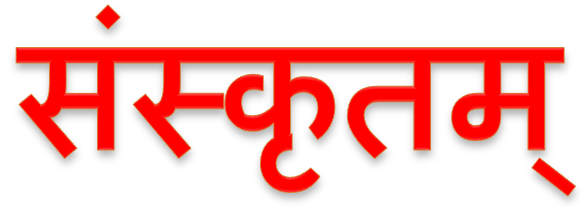
The word "sanskrit" in devanagari
An other word whose etymology is very interesting is “guru” (in devanagari गुरु), the spiritual teacher without whom it is impossible reach the true knowledge. The guru is who gives to pupil his own mantra and teaches him the holy texts. “Gu” means  “darkness” or “shadow” and “ra” means “to disperse” and the guru is who disperses darkness and consents to his pupil to see the light of true knowledge. According another theory “ru” in Sanskrit means "light" and the guru is the one who brings his pupil from darkness to light.
Also the word “mantra” (in devanagari मान्त्र) has a very significant etymology. Mantras are mystical verses or magical formulas, composed of only one syllable or one word or a complete phrase. Mantras are repeated during the meditation. The word "mantra" in Sanskrit derives from the root "man" which means "mind" and "tra" which in this case is the suffix that designates the instrument. So the mantra is "instrument of thought", the means by which to think or, more correctly, to make work "manas", the instrument of knowledge.

Etimologie: putra, guru e mantra

La parola "sanscrito" in devanagari
La parola “figlio” in sanscrito si dice “putra” ed è molto significativo. Infatti “putra” è una parola composta da “put” e “tra”. “Put” è il nome di uno degli inferni dell’induismo, mentre “tra” è un verbo e significa “proteggere”, “liberare”. Il figlio è quindi colui che “libera dall’inferno” dove il defunto sarebbe costretto a restare se non avesse un figlio maschio destinato a celebrare i riti funebri. Per questo motivo - come abbiamo visto - in India è molto importante avere un figlio maschio.
Un’altra parola la cui etimologia è molto interessante è “guru”, cioè il maestro spirituale senza il quale non è possibile raggiungere la conoscenza suprema, colui che assegna a ciascun discepolo il proprio mantra e che lo guida nella conoscenza dei testi sacri. Ebbene “guru” in sanscrito deriva da “gu”, che significa “oscurità” o “ombra” e da “ru” che significa “disperdere”, il guru è cioè colui che disperde l’oscurità, l’ombra e consente di vedere la luce della vera conoscenza. Altri attribuiscono alla sillaba “ru” il significato di “luce” ed il guru sarebbe quindi colui che dalle tenebre porta alla luce.
Anche la parola “mantra” ha una etimologia molto significativa. I mantra sono i versi mistici, le parole magiche, che possono essere costituite da una sola sillaba o da una frase intera e che vanno ripetute a voce o mentalmente durante la meditazione. La parola “mantra” in sanscrito viene fatta risalire alla radice “man” che significa “mente” e a “tra” che in questo caso è il suffisso che designa lo strumento. Quindi il mantra è “lo strumento del  pensiero”, il mezzo attraverso il quale pensare o, più correttamente, far funzionare “manas” cioè lo strumento della conoscenza.

domenica 23 ottobre 2011

The male child

Children in Cochin (Kerala - India)
Having a male child is necessary, indispensable for the salvation from damnation.
In India it is especially important, I would say essential, to have a son. To understand the reasons underlying this requirement is not sufficient to refer to aspects of an economic nature. No doubt, as we have seen in this previous post, a daughter means higher costs and lower benefits from an economic point of view, but it is necessary to analyze the motives of religious nature.
One day we will talk about hell, better about the hells of Hinduism, now it suffices  to say that a soul, stripped of the body after death and before of the reincarnated in another body will suffer the consequences of actions in 'heaven' or hell. After you have enjoyed or suffered for the actions in these lokas (place) the soul is reincarnated into another living being.
To avoid ending up in hell is first necessary to be conducted properly funeral ceremonies and is also necessary to be recited daily prayers for the ancestors. This is one of the three debts men must pay in this life, as well as to the gods and the sages to, everyone has a debt to the ancestors who must be worshiped and fed. The main protagonist of these ceremonies, these rituals and prayers of these is the male child.
"This debt - A. Danielou says in "The four ways of life"- can not be paid to creating a child who can continue the lineage, race, caste, family."
Not for nothing 'son' is said in Sanskrit putra, whose etymology goes back to the put, which is a type of hell, and traye, which in Sanskrit means to save, to preserve. The son is putra,  'He who saves from hell'.
This conviction brings with it many consequences. For example, in the Laws of Manu, the Manusmirti, the most important treaty on standards of behavior, it clearly states that women were created for boys and men to have offspring (Manusmirti IX, 96) and also provides that the husband can 'replace' the wife after eight years of marriage if the wife is infertile, after ten years of marriage if the wife has given birth children died, after eleven years if the wife has given birth only daughters (Manusmirti IX, 81).
Even in the choice of the woman to marry, Manu invites men to reject women from families with no sons, and that even if these families are "full of cows, goats, sheep, wheat, or property" (Manusmirti II, 7).
It is so important to have a son that Manu (IX, 174) considers it legitimate for a married man without sons can buy one for securing the funeral rites.
In the absence of sons, a grandson will perform the duties prescribed for his grandfather.
And  father on his deathbed whispers to son: "You are Brahman, you are the sacrifice, you are the world". The son replies, "I am Brahman, I'm the sacrifice, I am the world" (Brhadaranyaka Upanishad 5, 17).
And is the son who, after three laps counterclockwise around the pyre of his dead father, sets fire during the cremation rites.

Il figlio maschio

Bambini a Cochin (Kerala - India)
Avere un figlio maschio è necessario, indispensabile, per la salvezza dalla dannazione.
In India è particolarmente importante, direi essenziale, avere un figlio maschio. Per capire i motivi che stanno alla base di questa esigenza, non è sufficiente rifarsi ad aspetti di carattere economico. Senza dubbio, come abbiamo visto in questo precedente post, una figlia comporta maggiori spese e minori vantaggi da un punto di vista economico, ma è necessario analizzare le motivazioni di carattere religioso.
Un giorno parleremo dell'inferno, meglio degli inferni dell'induismo, oggi basti dire che un'anima, dopo essersi spogliata del corpo mortale e prima di reincarnarsi in un altro corpo subirà le conseguenze delle sue azioni in 'paradiso' o all'inferno. Dopo avere goduto o patito delle proprie azioni in questi loka (luoghi) l'anima si reincarnerà in un altro essere vivente.
Per evitare di finire all'inferno è innanzitutto indispensabile che vengano svolte in modo corretto le cerimonie funebri ed è altresì necessario che quotidianamente vengano recitate le preghiere per gli avi. Si tratta di uno dei tre debiti che l'uomo deve saldare nella vita terrena, oltre a quello verso gli déi e quello verso i saggi, ognuno ha un debito verso gli antenati che devono essere venerati e nutriti. Protagonista assoluto di queste cerimonie, di questi riti e di queste preghiere è il figlio maschio.
"Questo debito - ci dice A. Danielou ne "I quattro sensi della vita" - non può essere pagato che generando un figlio che possa continuare la discendenza, la razza, la casta, la famiglia."
Non per nulla in sanscrito figlio si dice putra la cui etimologia risale a put, che è un tipo di inferno, e a trayate, che in sanscrito significa salvare, preservare. Il figlio maschio è qundi putra, 'colui che salva dall'inferno'.
Questa convinzione porta con sè molte conseguenze. Per esempio nelle Leggi di Manu, la Manusmirti, cioè il più importante Trattato sulle norme di comportamento, si stabilisce chiaramente che le donne furono create per avere figli maschi e gli uomini per avere una discendenza (Manusmirti IX, 96) e si prevede anche che il marito possa 'sostituire' la moglie dopo otto anni di matrimonio se la moglie è sterile, dopo dieci anni di matrimonio se la moglie ha procreato figli morti, dopo undici anni se la moglie ha procreato solo figlie femmine (Manusmirti IX, 81).
Anche nella scelta della donna da sposare, Manu invita gli uomini a scartare donne appartenenti a famiglie che non hanno figli maschi e ciò anche se queste famiglie sono "ricche di vacche, capre, pecore, proprietà o grano" (Manusmirti II, 7).
E'così importante avere un figlio maschio che Manu (IX, 174) ritiene legittimo che un uomo sposato senza figli maschi possa comprarne uno per garantirsi i riti funerari.
In assenza di figli maschi, il nipote maschio potrà svolgere le funzioni prescritte a favore del nonno.
E' al figlio maschio che il padre in punto di morte trasmette le ultime volontà sussuradogli nell'orecchio: "Tu sei il brahman, tu sei il sacrificio, tu sei il mondo". Il figlio risponde "Io sono il Brahman, io sono il sacrificio, io sono il mondo" (Brhadaranyaka Upanishad I 5, 17).
Ed è il figlio che, dopo aver effettuato tre giri antiorari intorno alla pira del padre defunto, appicca il fuoco durante i riti della cremazione.