Visualizzazione post con etichetta Vahana. Mostra tutti i post

domenica 9 dicembre 2018

Nandin: the joyful devotee of Shiva

The vahana of Shiva, the vehicle of the great God, is a bull Nandin.  
Nandin in Sanskrit means "joyful" and this placid animal is also the most fervent devotee of Mahadeva.
The bull symbolizes vigor, virtue, the moral rectitude and wisdom, but also the sexual instinct dominated by Shiva. 
Along with the cow, the bull is considered a sacred animal in India, the bearer of good fortune and wisdom. 
Its imprint, nandipada, it is equally sacred and bearer of good fortune. 
Nandin is always guarding the door of Shiva and prevents jamming to distract Shiva from his occupation: meditating or loving with Parvati. 
In all the temples, in front of the room where is placed the image of Shiva, the Lingam, is always placed Nandin because it is disrespectful for a mere mortal to apply directly to the great God, the faithful whisper in bull's ear their requests. It will then be the bull in reference to their God. Especially in South India, the images and statues of the bull Nandin are widespread. 


One of the biggest bull is Nandin in Mysore, city of Karnataka, where on the Chamundi Hill is a huge bull, five meters high, carved from a single block of stone in 1659 and depicted in the photo to the side. 

Another huge Nandi is before the wonderful Brihadishvara Temple, the Shiva temple of Thanjavur (or Tanjore). A six-meter long statue of granite that looks toward the main door of the temple.


Faithful Shaiva in Temple of Goddess Meenakshi in Madurai whisper in the ear of Nandin their requests to God Shiva.


Nandin has many epithets, including Tandavatalika when he plays and accompanies the dance of Shiva Nataraja and Nandikeshvara which means 'joy of the Lord'. 


In this bas-relief brass at the base of the flag of a Shaiva temple is depicted Nandin leading Shiva and Parvati represented by the Shivalingam.


Nandin: il gioioso devoto di Shiva

Il vahana di Shiva, il veicolo del grande Dio, è un toro: Nandin, 
In sanscrito Nandin significa "il gioioso" e questo placido animale è anche il più fervente devoto del Mahadeva.
Il toro simboleggia il vigore, la virtù, la dirittura morale e la saggezza, ma anche l'istinto sessuale dominato da Shiva.
Insieme alla vacca, il toro è considerato un animale sacro in India, portatore di buona sorte e saggezza.
La sua impronta, nandipada, è altrettanto sacra e portatrice di fortuna.
Nandin è sempre a guardia della porta di Shiva ed impedisce ai disturbatori di distogliere Shiva dalle sue occupazioni: meditare o amoreggiare con Parvati.
In tutti i templi, davanti alla sala dove è collocata l'immagine di Shiva, il Lingam, è posto sempre Nandin e poichè è poco rispettoso per un semplice mortale rivolgersi direttamente al grande Dio, i fedeli sussurrano in un orecchio di Nandin le proprie richieste. Sarà poi il toro a riferirle al Dio.
Soprattutto nell'India del sud, le immagini e le statue del toro Nandin sono molto diffuse. 


Uno dei Nandin più grandi è a Mysore, città del Karnataka, dove a metà della collina di Chamundi c'è un toro enorme, alto cinque metri, scolpito in un unico blocco di pietra nel 1659 e raffigurato nella foto di lato.
Un altro Nandi enorme è dinnanzi al meraviglioso Brihadishvara temple, il tempio di Shiva di Thanjavur (o Tanjore). 
Una statua lunga sei metri di granito che guarda verso la porta principale del tempio.


Fedeli
 shivaiti nel Tempio della Dea Meenakshi a Madurai che sussurrano nell'orecchio di Nandin le proprie richieste al Dio Shiva.

Nandin ha molti epiteti, tra questi Tandavatalika quando suona e accompagna la danza di Shiva NatarajaNandikeshvara che significa 'Signore della gioia'.


In questo bassorilievo in ottone posto alla base della bandiera di un tempio shivaita è raffigurato Nandin che conduce Shiva e Par-vati rappresentati dallo Shiva- lingam.


domenica 19 ottobre 2014

Nandin: il gioioso devoto di Shiva

Il vahana di Shiva, il veicolo del grande Dio, è un toro: Nandin, 
In sanscrito Nandin significa "il gioioso" e questo placido animale è anche il più fervente devoto del Mahadeva.
Il toro simboleggia il vigore, la virtù, la dirittura morale e la saggezza, ma anche l'istinto sessuale dominato da Shiva.
Insieme alla vacca, il toro è considerato un animale sacro in India, portatore di buona sorte e saggezza.
La sua impronta, nandipada, è altrettanto sacra e portatrice di fortuna.
Nandin è sempre a guardia della porta di Shiva ed impedisce ai disturbatori di distogliere Shiva dalle sue occupazioni: meditare o amoreggiare con Parvati.
In tutti i templi, davanti alla sala dove è collocata l'immagine di Shiva, il Lingam, è posto sempre Nandin e poichè è poco rispettoso per un semplice mortale rivolgersi direttamente al grande Dio, i fedeli sussurrano in un orecchio di Nandin le proprie richieste. Sarà poi il toro a riferirle al Dio.
Soprattutto nell'India del sud, le immagini e le statue del toro Nandin sono molto diffuse. 


Uno dei Nandin più grandi è a Mysore, città del Karnataka, dove a metà della collina di Chamundi c'è un toro enorme, alto cinque metri, scolpito in un unico blocco di pietra nel 1659 e raffigurato nella foto di lato.
Un altro Nandi enorme è dinnanzi al meraviglioso Brihadishvara temple, il tempio di Shiva di Thanjavur (o Tanjore). 
Una statua lunga sei metri di granito che guarda verso la porta principale del tempio.


Fedeli shivaiti nel Tempio della Dea Meenakshi a Madurai che sussurrano nell'orecchio di Nandin le proprie richieste al Dio Shiva.


Nandin ha molti epiteti, tra questi Tandavatalika quando suona e accompagna la danza di Shiva Nataraja, Nandikeshvara che significa 'Signore della gioia'.


In questo bassorilievo in ottone posto alla base della bandiera di un tempio shivaita è raffigurato Nandin che conduce Shiva e Parvati rappresentati dallo Shivalingam.


Nandin: the joyful devotee of Shiva

The vahana of Shiva, the vehicle of the great God, is a bull Nandin.   

Nandin in Sanskrit means "joyful" and this placid animal is also the most fervent devotee of Mahadeva. 
The bull symbolizes vigor, virtue, the moral rectitude and wisdom, but also the sexual instinct dominated by Shiva. 
Along with the cow, the bull is considered a sacred animal in India, the bearer of good fortune and wisdom. 
Its imprint, nandipada, it is equally sacred and bearer of good fortune. 
Nandin is always guarding the door of Shiva and prevents jamming to distract Shiva from his occupation: meditating or loving with Parvati. 
In all the temples, in front of the room where is placed the image of Shiva, the Lingam, is always placed Nandin because it is disrespectful for a mere mortal to apply directly to the great God, the faithful whisper in bull's ear their requests. It will then be the bull in reference to their God. Especially in South India, the images and statues of the bull Nandin are widespread. 


One of the biggest bull is Nandin in Mysore, city of Karnataka, where on the Chamundi Hill is a huge bull, five meters high, carved from a single block of stone in 1659 and depicted in the photo to the side. 
Another huge Nandi is before the wonderful Brihadishvara Temple, the Shiva temple of Thanjavur (or Tanjore). A six-meter long statue of granite that looks toward the main door of the temple.


Faithful Shaiva in Temple of Goddess Meenakshi in Madurai whisper in the ear of Nandin their requests to God Shiva.


Nandin has many epithets, including Tandavatalika when he plays and accompanies the dance of Shiva Nataraja and Nandikeshvara which means 'joy of the Lord'. 


In this bas-relief brass at the base of the flag of a Shaiva temple is depicted Nandin leading Shiva and Parvati represented by the Shivalingam.

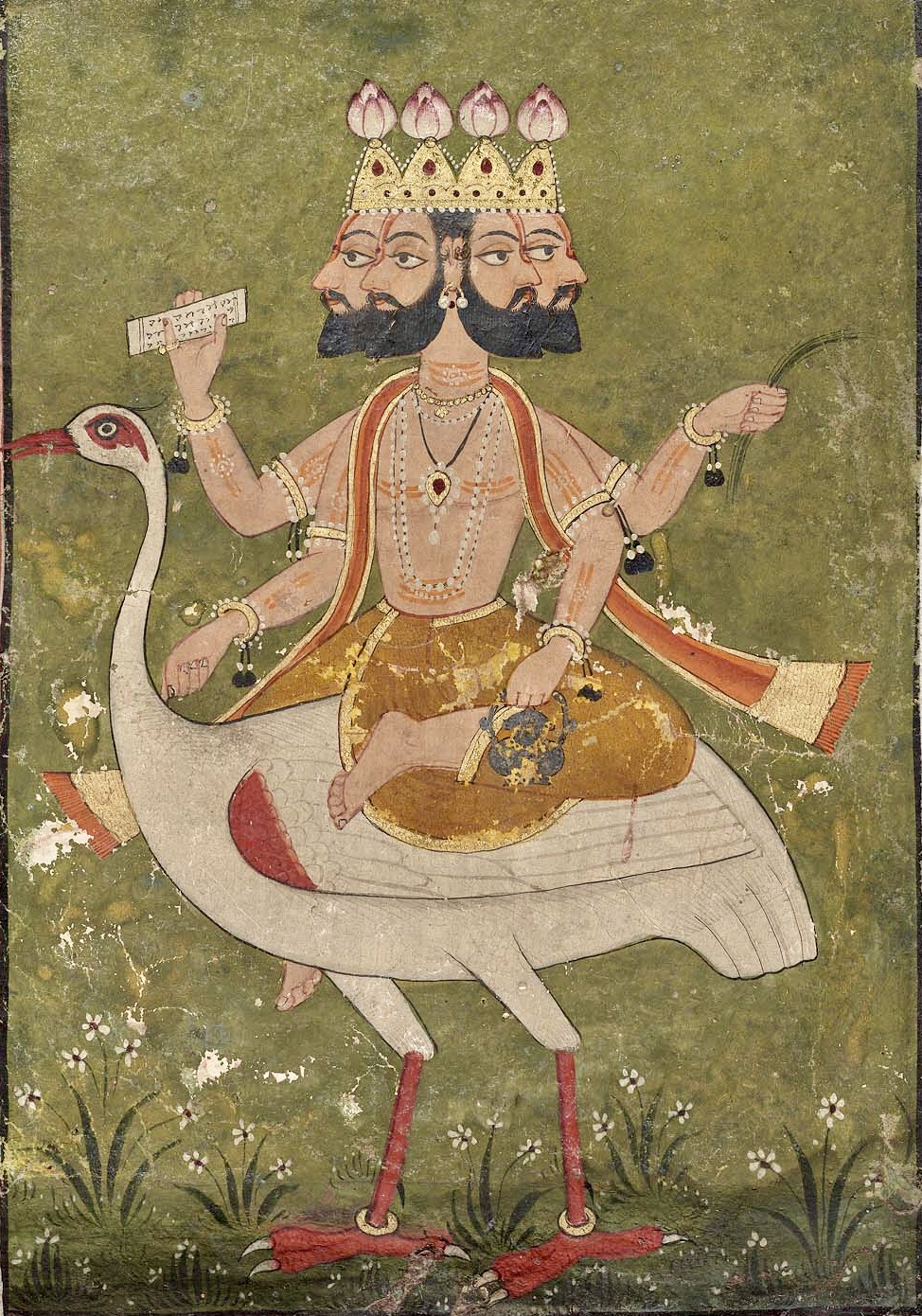


sabato 2 novembre 2013

Hamsa mantra

Brahma on his vahana, Hamsa
One of the most powerful and most famous mantra is the Hamsa Mantra, Mantra of the with swan.
The sacred texts, one for all the Shivasutravirmasini, require that the mantra should be repeated 21,600 times.
The syllable ham is pronounced with inspiration and the syllable sa with exhalation. And since the two phases of respiration occupy about four seconds, the repetition of the mantra for 21,600 times covers a period of 24 hours, one day (86,400 seconds that is, in fact, 24 hours).
The word hamsa refers to wild goose or withe swan, among other things it is the vahana of Brahma and his wife Saraswati. 
That animal is the symbol of transcendent knowledge as it can with its flight to break away from the lake as well as the man has to succeed, with the continued repetition of the mantra to break away from the illusory world of maya.
The mantra is very important for the Vedanta philosophy because hamsa refers to the words so ham (I am that) that refers to the identification of individual atman with the supreme Brahman.
The repetition (japa) of this mantra ensures the achievement of the purushatra, the four aims of life dharma, artha, kama and moksha.


Il Mantra Hamsa

Brahma sul suo vahana, l'Hamsa
Uno dei mantra più potenti e più famosi è l’Hamsa Mantra, il Mantra dell’oca o del cigno
I testi sacri, uno per tutti lo Shivasutravirmasini, prescrivono che il mantra vada ripetuto 21.600 volte. 
La sillaba ham va pronunciata con l’ispirazione e la sillaba sa con l’espirazione. E poiché le due fasi della respirazione occupano circa quattro secondi, la ripetizione del mantra per 21.600 volte copre l’arco delle 24 ore (86.400 secondi cioè, appunto, 24 ore).
La parola hamsa fa riferimento all’oca selvatica, tra l’altro vahana di Brahma e di sua moglie Saraswati, simbolo della conoscenza trascendente in quanto riesce col suo volo a staccarsi dal lago così come l’uomo deve riuscire, con la protratta ripetizione del mantra a staccarsi dal mondo illusorio di maya.
Il mantra è molto importante per la filosofia vedanta perchè hamsa fa riferimento a ham so che significa io sono e che si riferisce all’identificazione dell’atman individuale con il supremo brahman.
La ripetizione (japa) di questo mantra assicura il raggiungimento dei purushartha dei quattro scopi della vita dharma, artha, kama e moksha.


martedì 13 novembre 2012

L'immagine di Shiva


La figura di Shiva, una delle principali e più antiche divinità dell’Induismo, mi seduce molto nella sua (apparente) contraddittorietà: Mahayogi (Grande yogi) e mendicante, asceta e seduttore, creatore dell’Universo nella meravigliosa danza cosmica del Nataraja e distruttore del mondo, dio benefico (in sanscrito Shiva significa propizio, benevolo, fausto) e dio della morte e della dissoluzione,  dio potente e creatore che ha nel lingam (il fallo) il suo simbolo e dio mezzo uomo e mezza donna nel suo aspetto androgino di Ardhanarishvara.
Shiva ha molteplici forme e molteplici aspetti, nello Shiva Purana si contano 1008 nomi del grande dio sui quali un giorno tornerò a scrivere.
Oggi voglio soffermarmi su una delle più diffuse rappresentazioni del Dio per analizzare posizione, attributi, mudra, cioè gesti delle mani.
Nella prima immagine pubblicata in questo post, lo vediamo seduto nella posizione del loto (padma asana) sopra una pelle di leopardo (in altre immagini è di tigre o di daino) lo stesso tipo di pelle che ne costituisce unica veste.
Shiva ha tre occhi, per questo è anche detto Trinetra Tryamabaka (dai tre occhi appunto). Essi simboleggiano il sole, la luna e il fuoco, le fonti di illuminazione della terra, dello spazio e del cielo. Sono gli occhi che vedono il passato, il presente ed il futuro. Il terzo occhio, quello centrale, è detto gyana chakshu (occhio della saggezza), è l’occhio dello conoscenza trascendente, che non è rivolto all’esterno, ma all’interno, perché la verità non è fuori di noi, ma dentro di noi. E’ l’occhio col quale Shiva con un solo sguardo incenerì Kama il dio dell’amore che lo stava tentando.
Lingam
Sulla testa il dio ha un crescente di luna al quinto giorno, simbolo della bevanda sacra soma, ma simbolo anche dell’oblazione del sacrificio e della potenza creatrice.
La fronte del dio presenta le tre caratteristiche strisce dello shivaismo.
Dai capelli legati in una crocchia (jata o jatamakuta) scaturiscono la sacre acque della Ganga, il fiume che scorre nel cielo come Via Lattea e che discese sulla terra per consentire la vita degli uomini.
Vari cobra sono avvolti sul corpo del dio, simbolo della morte, ma anche dell’energia. Il collo di Shiva è blu perché il dio bevve il veleno halahala emerso dal frullamento primordiale dell’oceano.
Al collo, oltre ad una ghirlanda di fiori, anche il rosario induista, il japamala formato da semi di rudraksha (occhi di Rudra, altro nome di Shiva), lo stesso che ha ai polsi.
Shiva ha quattro braccia, simbolo di potere universale, con una mano destra tiene il trishula (tridente) simbolo delle tre tendenze della natura (guna) o delle tre funzioni del dio: creazione, conservazione e distruzione dell’universo. Con una mano sinistra afferra il damaru, un piccolo tamburo formato da due triangoli uniti per il vertice che simboleggiano l’aspetto maschile e quello femminile dalla cui unione scaturisce l’universo.
Con la seconda mano destra il dio fa il gesto del ‘non temere’, l’abhayamudra, mentre la sinistra  è nel Jnanamudra, il gesto della conoscenza.
Davanti al dio si erge un lingam (in sanscrito segno), il simbolo astratto del fallo, è la realtà immanifesta, il tutto che è e non è, e che si manifesta con l’unione con la yoni, l’energia femminile su cui spesso è appoggiato il lingam. Sul lingam, oltre alle tre strisce tipiche dello shivaismo, anche la sacra sillaba Om.
Alla destra del dio c’è una ciotola per raccogliere l’elemosina e un piatto di frutta, offerta sacrificale alla divinità.
Nella seconda immagine di Shiva pubblicata su questo post, oltre a quanto già detto, da segnalare il toro bianco Nandin, il vahana (veicolo) di Shiva la cui statua – soprattutto nell’India del sud – è posta innanzi alla stanza del tempio dove è collocato il dio affinché possa essere intermediario tra Shiva stesso ed i fedeli che sussurrano nell’orecchio dell’animale i voti offerti e le grazie richieste alla divinità come illustra la terza foto che ho scattato a Madurai (Tamil Nadu) nello splendido tempio dedicato alla dea Meenakshi.

venerdì 29 aprile 2011

Di nuovo Ganesh

Ho già raccontato la più diffusa storia che riguarda la nascita di Ganesh, il dio dalla testa di elefante, ‘figlio’ di Shiva e Parvati. Oggi voglio però raccontarne un’altra, meno conosciuta, ma forse più interessante che è narrata in altri testi, principalmente nel Brhaddharma Purana.

Ebbene Shiva se ne stava assorto in meditazione quando la moglie Parvati lo interruppe. Voleva un figlio. Il Grande dio, il Mahayogi però si era sempre rifiutato di avere una discendenza. “I figli – diceva – servono ai genitori per lo svolgimento dei riti funebri e per la recitazione delle preghiere agli avi, ma io sono immortale e quindi non ne ho bisogno.”
A differenza degli altri dei infatti, Shiva (e prima di lui il suo corrispondente vedico Rudra), è fiero oppositore alla procreazione in quanto protettore dell’unità perfetta ed indistinta del brahman contro la dualità insita nella creazione dell’altro da Sé. Ma questo è un altro discorso.
Insomma, le insistenze di Parvati stremarono anche il Grande Dio che formò un bambino di pezza utilizzando il sari della moglie e glielo porse.
Parvati si irritò, “credi che sia una bambina dandomi una bambola di pezza per giocare?” Ma, una volta preso in braccio quel pezzo di stoffa, il bambino si animò. Parvati era raggiante, aveva un figlio da amare e lo mostrò a Shiva che lo esaminò. “Il bambino è nato sotto un cattivo auspicio – disse però il dio – Sanaiscara, il dio del pianeta Saturno lo ha condannato a una repentina morte.” E detto ciò al piccolo cadde a terra la testa.
Parvati fu disperata, non si dava pace, era passata dalla gioia di avere un figlio allo straziante dolore di vederlo morire.
Mosso a compassione, Shiva tentò di riattaccare la testa al piccolo, ma senza successo. Il dio allora ordinò al suo fedele servitore, il toro Nandin, di andare verso nord e di portare la testa di chiunque avesse trovato in quella direzione.
Nandin partì verso settentrione e si imbattè in Airavata, l’elefante bianco, vahana, cioè veicolo, di Indra. Ovviamente Indra cercò di impedire a Nandin di tagliare la testa a Airavata e nacque uno scontro che coinvolse anche altri dei. Ma la forza di Nandin però, che non era altro che la forza di Shiva, prevalse e alla fine il sacro toro tagliò la testa dell’elefante e la portò a Shiva che la pose sul collo del bambino che riprese vita. Così nacque Ganesh, signore degli elefanti e signore delle schiere, dio del benaugurio e dio della letteratura, Ekadanta cioè da una sola zanna in quanto l’altra si ruppe nella lotta contro Nandin.
E Indra? E il povero Airavata? Il re degli dei andò umilmente a chiedere perdono a Shiva il quale, nella sua benevolenza, gli disse: “Getta il corpo del tuo elefante nell’oceano, Airavata ne emergerà sano e salvo al momento del frullamento cosmico.” E così avvenne, come narrato in un altro post.

Ganesh again

I have told the most popular story about the birth of Ganesh, the elephant-headed God son of Shiva and Parvati. But today I want to tell another story, less known but perhaps more interesting told in other texts, but mainly in Brhaddharma Purana.

Ganesh bought in Mumbay
Well, Shiva stood absorbed in meditation when his wife Parvati interrupted him. She wanted a son. But the Great God, Mahayogi had always refused to have an offspring. “The children – he said – are used by parents to perform funeral rites and recitation of prayers to the ancestors, but I am immortal, and then I do not need it.”
Unlike the other Gods in fact, Shiva (and before him his corresponding Vedic God, Rudra), is proud opponent of procreation as protector of perfect and indistinct unity of Brahman against the duality inherent in creating the other by Self. But that’s another story.
Well, Parvati’s insistence exhausted even the Great God who made a child using patch of the sari of his wife and handed it to her.
Parvati was angry, “do you think I’m a girl giving me a rag doll to play?” But, picked up that piece of cloth, the baby came to life. Parvati was beaming, she had a son to love and showed him to Shiva who examined him. “The baby was born under a bad omen – Shiva said – Sanaiscara, the God of planet Saturn sentenced him to a sudden death.”
That said, the head of baby fell to the ground.
Parvati was hopeless, desperate, she was moved by the joy of having a child with the excruciating pain of seeing him die.
Moved with compassion, Shiva tried to reattach the head to the baby, but without success. The God then ordered his faithful servant, the bull Nandin, to go north and bring the head of anyone found in that direction.
Nandin went northward and came across Airavata, the white elephant , vahan, i.e. vehicle, of Indra. Obviously Indra tried to prevent Nandin to cut the head of Airavata and a hard fight began between Nandin, Indra and others Gods. But the strength of Nandin was the power of Shiva and prevailed and in the end the sacred bull cut off the head of the elephant and brought it to Shiva. The Great Gos put the head on the neck of his child and he came back to life. Thus Ganesh was born, Lord of the elephants and Lord of hosts, good luck God and God of literature, Ekadanta i.e. one tusked God as the other tusk was broken in the fight against Nandin.
And Indra? And poor Airavata? The King of the Gods went to ask for forgiveness of Shiva who, in his benevolence, said: “Throw the body of your elephant in the ocean, Airavata will come out safe and soul waters from at the time of churning of primordial ocean.” And so it happened, as told in another post.

venerdì 25 marzo 2011

Little Shiva

This picture of the little Shiva is very reassuring, it is in a temple of Shiva in my beloved Cochin in Kerala, wonderful State of south India.
He’s a baby Shiva, but he has all attributes of great god which I’ve described in another post.
The little boy is sleeping serenely on a leopard leather, in his right hand he is grasping trishula of the top of that there is the little dram damaru from which primordial syllable AUM was born and it is made by union of two triangles, female and male aspects, Shakti and Purusha, yoni and lingam. In left hand of little Shiva the is a little cobra.
There are a crescent of moon on his head, another small cobra and Ganga water springing from his hair. In the middle of his forehead there is the third eye and he has a japamala (rosary or prayer beads) around his neck.
I like the context of this picture too. In the background Himalaya rises majestically, that is the abode of Shiva. There is the vahana, the vehicle of Shiva:  the white bull, Nandi.
On lift side there is the mystic symbol of Shiva, the lingam-yoni, the union between male and female principles living  inside the God and from which the universe was born. On the top of lingam, there is padma, the lotus.

Shiva bambino

E’ molto rassicurante questa immagine di Shiva bambino che si può trovare in un tempio shivaita della mia amata Cochin, città del Kerala, meraviglioso stato del sud dell’India.
E’ un piccolo Shiva, ma ha tutti gli attributi della grande divinità che ho descritto in precedente post.
Il bambino dorme serenamente sopra una pelle di leopardo, nella mano destra stringe il trishula alla cui sommità è legato il tamburello damaru dal quale scaturì la sillaba primordiale AUM e che è formato dall’unione di due triangoli, l’aspetto femminile e quello maschile, shakti e purusha, yoni e lingam. Nella mano sinistra il piccolo Shiva tiene un piccolo cobra.
Sulla testa troviamo il crescente di luna, un altro piccolo cobra, la crocchia dalla quale scendono le acque della dea Ganga. Al centro della fronte è situato il terzo occhio e il collo è ornato da un rosario shivaita.
Mi piace anche il contesto. Sullo sfondo si ergono le catene himalayane, residenza di Shiva e si scorge il vahana del dio, il veicolo, il fedele toro Nandin.
Sulla sinistra invece sta l’immagine mistica della divinità, il lingam-yoni, l’unione del maschile e del femminile che abitano all’interno del dio. Sopra il lingam, che è adornato dalle tre strisce orizzontali dello shivaismo, è posto un fiore di loto (padma).