sabato 31 marzo 2012

Yajnavalkya e la topolina

In India spesso si ricorda una storia tratta dal Panchatantra, la famosa raccolta di racconti indiani, per spiegare l’idea Indiana dell’ineluttabilità della propria condizione personale a causa del residuo karmico, a causa cioè delle conseguenze derivanti da azioni compiute anche in vite precedenti. 
File:Shri Surya Bhagvan bazaar art, c.1940's.jpg
Surya, Dio del Sole
Ecco una di queste storie. 

Un giorno il saggio Yajnavalkya stava compiendo le personali abluzioni nel sacro Gange quando dal cielo cadde nelle sue mani una topolina che si era fortunosamente liberata dal becco di un uccello rapace. 
Con la forza delle proprie austerità e grazie ai poteri che aveva accumulato, il saggio trasformò la topolina in una bellissima bambina. 
Yajnavalkya tornò a casa e consegnò la piccola alla moglie che non riusciva ad avere figli e le disse: 
“Ecco, prendi questa bambina, accoglila e crescila come se fosse nostra figlia.” 
La bambina crebbe serena nella famiglia del saggio e giunse all’età in cui doveva essere data in sposa. Yajnavalkya amava molto quella che era diventata sua figlia e non voleva imporle un marito, ma desiderava che l’uomo scelto fosse di gradimento della ragazza. 
Il saggio pensò subito a una marito bellissimo e soprattutto potente e si rivolse a Surya, il Dio Sole, che si dichiarò disponibile. 
“Surya è troppo ardente – disse però la ragazza – non posso accettarlo.” 
Yajnavalkya allora chiese a Surya: 
“O venerabile Dio del Sole chi è più potente di te?” 
“La nuvola è più potente di me – rispose Surya – infatti quando giunge lei, io divento invisibile.” 
“Ti piace la nuvola?” chiese allora il saggio alla figlia. 
“No – rispose la ragazza – la nuvola è fredda e buia.” 
Yajnavalkya si rivolse allora alla nuvola e le chiese: 
“Potente nuvola, chi ti è superiore?” 
“Il Vento – rispose lei – quando spira il Vento io vengo spazzata via.” 
Ma alla ragazza non piaceva neppure il vento, “è troppo instabile” disse. 
“Oh Vayu, potente Dio del vento – chiese allora Yajnavalkya – chi è più forte di te?” 
“Il Dio della montagna è più forte di me – rispose il vento – quando lo incontro non riesco mai ad oltrepassarlo e la mia corsa si deve fermare.” 
 “Dammi un altro marito – disse però la ragazza – la montagna è troppo aspra e dura, non voglio sposarla.” 
Ma chi ci poteva essere di più potente di una montagna? 
Yajnavalkya chiese allora umilmente alla montagna: 
“O possente, chi è più forte di te?” 
E la montagna rispose: 
“I topi, loro sono più potenti di me perchè scavano fori nel mio corpo senza che io possa farci niente, rivolgiti a loro.” 
Yajnavalkya andò allora dal Re dei topi e chiese a sua figlia se quello era il marito che voleva. 
“Oh sì – disse lei raggiante – finalmente uno della mia specie, padre ti prego trasformami nuovamente in topo poiché è lui il marito che voglio!” 
E così fu.

Yajnavalkya and the rat-girl

A story from the Panchatantra, the famous collection of Indian tales, is often used to explain the indian idea of ineluctability of personal condition because of karma. Here it is. A story from the Panchatantra, the famous collection of Indian tales, is often used to explain the indian idea of ineluctability of personal condition because of karma. Here it is.


Surya, God of Sun
Once on the Holy Ganges the wise man Yajnavalkya was bathing when a little mouse, escaping from the beak of a bird, dropped into his hand. By the power of his austerity the mouse changed in a little girl and Yajnavalkya gave the girl to his wife and said to her: “Take this little girl and bring her up with care as though she were our own daughter.”
The girl grew up and reached a marriageable age. 
Yajnavalkya wanted an important and powerfull husband for her, but he wanted she were to choose his own man.
The wise man thought give her to Surya God of Sun.
“This is the Sun - Yajnavalkya said to his own daughter - who lights the three worlds, will you  choose him?” 
The girl answered: “Surya is too hot, I don’t want him.” 
Then Yajnavalkya said to the Sun. “Surya, is there any other more powerful then you?” 
“The Cloud is more powerful then me – Surya answered – when it cover me, I become invisible.” 
“Do you like the Cloud?” the wise man asked to girl. 
“I don’t – she answered – the Cloud is too cold and black.”
“Is there any other more powerful then you?” Yajnavalkya asked to the Cloud.
“The Wind is stronger then me – the Cloud answered – when the Wind blows I scatter in the sky.” 
Therefore Yajnavalkya proposed to her daughter the Wind, but she refused because the Wind was too variable. 
The Wind said to Yajnavalkya the Mountain was stronger then him, because the Mountain could stop him. 

“Give me to some one else – the girl said – the Mountain is too rude and harsh.” 

“But who is greater and stronger then the Mountain?” Yajnavalkya asked. 
“The Rats – the Mountain answered – the Rats can gnaw my body and I cannot prevent it. The Rats are more powerful then me!” 
Yajnavalkya went to King of Rats and asked her daughter if that was the husband she wanted. 
“Yes – she answered – he is one of my own species, father, change me again into a mouse and give me to the Rat.” 
And so it was.

domenica 25 marzo 2012

Purushartha, the aims of the life

The aims of the life of every person according to Indian tradition are four and are called purushartha (purusha = person, artha = aim). These are dharma, artha, kama and moksha. Each person in your own life has to achieve these goals.
Dharma is the duty, virtue, righteousness, behaving ethically according to the environment, nature and the circumstances in which the person is located. There is not a absolute moral, that works for everyone, there is a individual, particular moral, which varies according to the historical period, social class, the situation in which one lives. For this reason we speak of svadharma ie individual dharma.
The other purpose is artha, the attainment of material wealth, prosperity, the fulfillment of their work, establishing and maintaining a family.
The third human purpose is the desire, material pleasure, kama, satisfaction of the sensual world. In kama are all part of the pleasures related to the body, the satisfaction of hunger, thirst, sleep, sexual desire.
The ultimate purpose, the final aim the satisfaction of which interrupts the samsara, the cycle of rebirth, is moksha. Only a balanced person, who has got the other three purposes of life can achieve this goal, and certainly he cannot achieve it in one lifetime.
Moksha is freedom from desire, from the illusion of maya, ignorance of avidya. With moksha every individual existence ceases and the Atman merges with Brahman, which is sat-cit-ananda, existence-consciousness-bliss.


Purushartha, gli scopi della vita

Jaipur

Gli scopi della vita di ogni persona secondo la tradizione indiana sono quattro e sono detti i purushartha (purusha = persona, artha = fine). Si tratta di dharma, artha, kama e moksha. Ogni persona nella propria vita dovrebbe realizzare questi scopi.
Il dharma è il dovere, la virtù, la rettitudine, il comportarsi eticamente secondo l’ambiente, la natura e la circostanza in cui la persona si trova. Non esiste una morale assoluta, che vada bene per tutti, esiste una morale individuale che varia col variare del periodo storico, della classe sociale, della situazione in cui uno vive. Per questo si parla di svadharma ossia del dharma individuale.
L’altro scopo è l’artha, il raggiungimento del benessere materiale, il compimento del proprio lavoro, la costituzione e il mantenimento di una famiglia.
Il terzo scopo è il desiderio, kama, il soddisfacimento della sfera sensuale nel senso più ampio. In kama rientrano tutti i piaceri legati al corpo, la soddisfazione della fame, della sete, del riposo, del desiderio sessuale.
Lo scopo supremo, finale, lo scopo la cui soddisfazione interrompe il samsara, il ciclo delle rinascite, è moksha. Solo una persona equilibrata, che ha soddisfatto gli altri tre scopi della vita può raggiungere questo obiettivo e non può certo raggiungerlo in una sola vita.
Moksha è la liberazione dal desiderio, dall’illusione di maya, dall’ignoranza dell’avidya. Con moksha cessa ogni esistenza individuale e l’atman si confonde col brahman che è sat-cit-ananda, essere-conoscenza-beatitudine.


domenica 18 marzo 2012

Harihara

Harihara, Vishnu on the left
and Shiva on the right
The sage Shankaracharya, pilosopher of Vedanta, had come on pilgrimage to a large city in India and asked to go to the main temple to give thanks to God, but the city was inhabited mainly by people of faith Vaishnava and the temple the city was dedicated to Vishnu. This was a problem as it was known that Shankara was a Shaivite and at that time the contrasts between the two confessions were very hard. 
The Brahmans of the temple therefore refused to grant permission to Shankara to enter the temple. The wise man then spoke to the Brahmans, and citizens, he explained his theory of the one God, the basis of Vedanta. To prove the correctness of his beliefs, he invited the Brahmans to go in garbhagrha, the most sacred sanctuary of the temple, one that preserves the main deity. The Brahmans went where it was kept a statue of Vishnu and found that the statue was changed. For half it was still represented Vishnu, but in the other half was represented Shiva. Harihara was born, God, half Vishnu and half Shiva, also called Shambuvishnu or Shankaranarayana. 
Convinced by the words and 'miracle' of Sankara, it was allowed to enter the temple to the sage. This legend explains Harihara worship of the god half Vishnu and half Shiva, trying to end to the sectarian warfare that characterized 'medieval' Hinduism and representation of the basic concept of Hinduism throughout the oneness of God, to beyond the many forms in which it is venerated.
In Harihara, the left half represents Vishnu with his usual attributes, including the royal crown and the disk. In the half left is Shiva with matted hair, the crescent moon, the stream that represents the Ganges and the Trishula.
Hari in Sanskrit means yellow, but also fascinating, beautiful all the epithets of Vishnu and Hara means take away, remove, and is one of the 1008 names of Shiva, the destroyer, which, in fact, take away.
In Harihara then we have the preservation and destruction in one image, the space (Vishnu) and time (Shiva) present in a syncretism of the theological meaning very pregnant. 
There is another tradition that harks back to the Puranas, I'll talk about in another post.

Harihara

Harihara, a sinistra Vishnu, a destra Shiva
Il saggio Shankaracharya, teorico del Vedanta, era giunto in pellegrinaggio in un’importante città dell’India e chiese di essere condotto al tempio principale per rendere grazie a Dio. 
La città però era abitata prevalentemente da persone di fede vaishnava, cioè vishnuita, e il tempio della città era dedicato a Vishnu. Questo era un problema in quanto era noto che Shankara era uno shivaita e in quel periodo i contrasti tra le due confessioni erano molto accesi. I brahmani del tempio pertanto si rifiutarono di concedere a Shankara il permesso di entrare nel tempio. 
Il saggio allora parlò ai brahmani e ai cittadini e spiegò la sua teoria dell’unico Dio, base del Vedanta. A riprova della correttezza delle proprie convinzioni, invitò i brahmani ad andare nel garbhagrha, il santuario più sacro del tempio, quello che conserva la divinità principale.
I brahmani si recarono là dove era conservata la statua di Vishnu e, con loro meraviglia, trovarono che la statua era cambiata. Per metà era ancora rappresentato Vishnu, ma nell’altra metà era rappresentato Shiva. Era nato Harihara, il Dio per metà Vishnu e per metà Shiva, detto anche Shambuvishnu o Shankaranarayana. 
Convinti dalle parole e dal ‘miracolo’ di Shankara, venne consentito al saggio di entrare nel tempio. 
Questa leggenda spiega il culto di Harihara, il dio per metà Vishnu e per metà Shiva, forse tentativo di porre fine alle guerre settarie che caratterizzarono l’induismo ‘medievale’ e rappresentazione del concetto base di tutto l’induismo quello cioè dell'unicità di Dio, al di là delle molteplici forme nelle quali viene venerato.
In Harihara, la metà sinistra rappresenta Vishnu con i suoi usuali attributi, tra cui la corona regale e il disco. Nella metà sinistra c’è invece Shiva con i capelli arruffati, la mezzaluna, lo zampillo che rappresenta il Gange e il trishula
Hari in sanscrito significa giallo, ma anche affascinante, bello tutti epiteti di Vishnu; mentre hara significa portar via, rimuovere ed è uno dei 1008 nomi di Shiva, il distruttore che, appunto, porta via.
In Harihara abbiamo quindi la preservazione e la distruzione in una sola immagine, lo spazio (Vishnu) e il tempo (Shiva) compresenti in un sincretismo dal significato teologico molto pregnante. 
Esiste anche un’altra tradizione sulla nascita del culto di Harihara, che si rifà ai Purana, ne parlerò in un prossimo post.

domenica 11 marzo 2012

Etymologies: putra, guru and mantra

The word “son” in Sanskrit is “putra” (in alfabeto devanagari पुत्रand it is very significant. “Putra” is composed by “put” and “tra.” “Put” in Sanskrit is a particular hell in Hinduism and “tra” means “to defend”, “to deliver.” The son is he who saves from this hill and in fact he is called “putra.” For this reason in India it is very important to have a son, a male child who will set fire of the funeral  pyre of his father (see here).
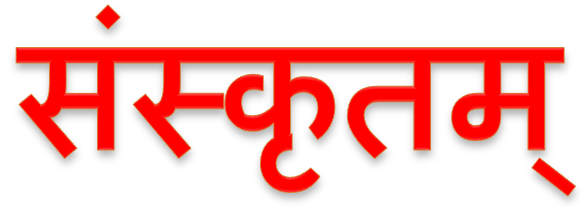
The word "sanskrit" in devanagari
An other word whose etymology is very interesting is “guru” (in devanagari गुरु), the spiritual teacher without whom it is impossible reach the true knowledge. The guru is who gives to pupil his own mantra and teaches him the holy texts. “Gu” means  “darkness” or “shadow” and “ra” means “to disperse” and the guru is who disperses darkness and consents to his pupil to see the light of true knowledge. According another theory “ru” in Sanskrit means "light" and the guru is the one who brings his pupil from darkness to light.
Also the word “mantra” (in devanagari मान्त्र) has a very significant etymology. Mantras are mystical verses or magical formulas, composed of only one syllable or one word or a complete phrase. Mantras are repeated during the meditation. The word "mantra" in Sanskrit derives from the root "man" which means "mind" and "tra" which in this case is the suffix that designates the instrument. So the mantra is "instrument of thought", the means by which to think or, more correctly, to make work "manas", the instrument of knowledge.