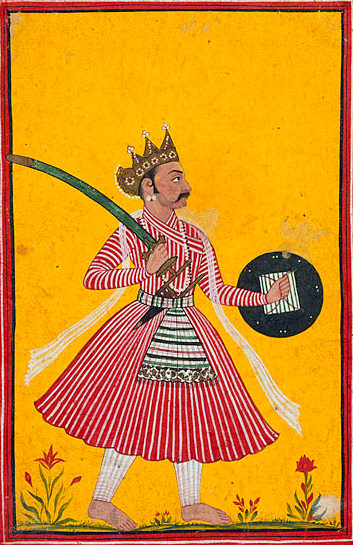
Visualizzazione post con etichetta Bhima. Mostra tutti i post

sabato 22 giugno 2013

Eulogy of forgiveness


Do you remember the Mahabharata? Do you remember Yudhishthira and his four brothers exiled for thirteen years in the forest with their wife Draupadi after losing the game of dice with the Kaurava cousins​​? Well, those were hard years, and years of hardship, and while the wise Yudhishthira was quite patient, Draupadi and Bhima had moments of discouragement and repeatedly invited the elder brother not to comply with the undertaking given and to attack and defeat the evil cousins .
Yudhishthira, the personification of virtue and dharma (of which he was also the son), he refuses and makes a praise of forgiveness that I summarize here.


Forgiveness is a virtue, forgiveness is sacrifice, forgiveness is the Vedas.Who knows it is able to withstand everything.
Forgiveness is Brahma, forgiveness is the truth, forgiveness is the merit of the ascetic, forgiveness is what holds the universe together.
He who forgives reaches the worlds that are obtained with great sacrifices or with the knowledge of the Vedas or the toughest of asceticism.
Forgiveness is the strength of the powerful, forgiveness is sacrifice, forgiveness is peace.
How can we abandon the forgiveness, which is where they reside Brahma and truth, wisdom, and the whole world?
The wise man should always forgive,
when it is able to forgive any man reaches Brahma.
This world and the other belong to those who are lenient.
In this world reach honors, another bliss.
Those who win their anger to forgiveness, they get the upper regions.
For this reason it has been said that forgiveness is the highest virtue.

Elogio del perdono

Vi ricordate il Mahabharata? Vi ricordate di Yudhishthira e dei suoi quattro fratelli esiliati per tredici anni nella foresta insieme alla moglie Draupadi dopo aver perso la partita a dadi con i cugini Kaurava?
Ebbene, furono anni duri, anni di privazioni e, mentre il saggio Yudhishthira riusciva a  sopportare tutto con pazienza, Draupadi e Bhima ebbero dei momenti di sconforto ed invitarono più volte il fratello maggiore a non rispettare l'impegno dato e di attaccare e sconfiggere i perfidi cugini.
Yudhishthira, personificazione della virtù e del dharma (di cui era anche figlio), si rifiuta e fa un elogio del perdono riportato nel Mahabharata che sintetizzo qui.


Il perdono è la virtù, il perdono è il sacrificio, il perdono è il Veda. 

Chi conosce questo è capace di sopportare tutto. 
Il perdono è Brahma, il perdono è la verità, il perdono è il merito dell'asceta,il perdono è ciò che tiene insieme l'universo. 
Colui che perdona raggiunge i mondi che si ottengono con i grandi sacrifici o con la conoscenza dei Veda o con le più dure delle ascesi. 
Il perdono è la forza dei potenti, il perdono è il sacrificio, il perdono è la pace. 
Come possiamo noi abbandonare il perdono, che è là dove risiedono Brahma e la verità, la saggezza e il mondo intero? 
L'uomo saggio dovrebbe sempre perdonare, 
quando è capace di perdonare tutto l'uomo raggiunge Brahma. 
Questo mondo ed anche l'altro appartengono a coloro che sono indulgenti. 
In questo mondo raggiungono gli onori, nell'altro la beatitudine. 
Coloro che vincono la propria ira per il perdono, ottengono le regioni superiori. 
Per questo è stato detto che il perdono è la virtù più alta. 

lunedì 28 novembre 2011

Lo sguardo di Gandhari e il destino di Duryodhana


Il combattimento 
tra Bhima e Duryodhana
Eravamo al diciassettesimo giorno della grande battaglia di Kurukshetra narrata dal Mahabharata. I Pandava stavano sconfiggendo i cugini Kaurava che tredici anni prima avevano con l’inganno usurpato il trono. 
Dei cento figli del re cieco Dhritarashtra ne rimaneva uno, il perfido Duryodhana, colui che rappresentava la causa della più grande e sanguinosa guerra dell’umanità. Il giorno dopo si sarebbe scontrato con Bhima in quello che presumibilmente sarebbe stato il combattimento finale. 
La regina Gandhari, madre di Duryodhana, era sopraffatta dal dolore per aver perso tutti i propri figli tranne uno, voleva ad ogni costo salvare Duryodhana anche se sapeva che tutta la tragedia era conseguenza delle colpe del figlio. 
Gandhari, che dal momento delle nozze si era coperta gli occhi con una benda per divenire cieca come cieco era suo marito Dhritarashtra, si era sottoposta ad austerità e meditazioni che le avevano conferito grandi poteri. Si fece condurre quindi sul campo di battaglia per dare una possibilità di salvezza al figlio. 
“Figlio mio – disse Gandhari a Duryodhana – domani mattina prima di andare a combattere vieni nella mia tenda completamente nudo.” 
Il giorno dopo Duryodhana si recò dalla madre senza vestiti indosso, ma all’ingresso della tenda si imbattè in Krishna, alleato dei nemici Pandava, che era andato a rendere omaggio alla regina, non a caso proprio in quel momento. 
“Duryodhana perché sei così, tutto nudo?” chiese Krishna. 
“Devo recarmi dalla regina mia madre,” rispose Duryodhana. 
“Ma è sconveniente e non è consentito presentarsi alla propria madre in questo stato, cingiti almeno i fianchi con un panno,” replicò Krishna. 
E Duryodhana, imbarazzato, così fece ed entrò nella tenda della madre. 
“Eccomi madre – disse – sono qui davanti a te.” 
Gandhari, per la prima volta da quando si era sposata, si tolse la benda e col suo sguardo mistico infuse nel corpo del figlio l’invincibilità, ma al tempo stesso la regina si disperò. 
“Perché ti sei coperto i fianchi con un panno? In questo modo le parti del tuo corpo che non sono state esposte al mio sguardo saranno vulnerabili!” 
“E’ stato Krishna a dirmi che non era opportuno presentarmi a te senza vestito alcuno, e così io ho fatto.” 
Krishna! La regina capì. Anche il destino del suo ultimo figlio era segnato. Il giorno dopo Duryodhana venne ucciso da Bhima che gli spezzò entrambe le gambe.

Gandhari's gaze and Duryodhana's fate

Nakula, one of the
five Pandavas brothers

Kurukshetra battle was at its seventeenth day. The Pandavas were defeating their cousins ​​Kauravas who, thirteen years before, had usurped the throne by deception as Mahabharata narrated.
Of the hundred sons of blind king Dhritarashtra was left just one, the wicked Duryodhana, who represented the cause of the biggest and bloodiest war of humanity. The next day he would fight against Bhima in what presumably would be the final battle.
Queen Gandhari, mother of Duryodhana, was overwhelmed by the pain of having lost all her sons except one, wanted save Duryodhana at all costs, even though she knew that the whole tragedy was a result of the sins of her son.
Gandhari, who since her marriage had covered her eyes with a bandage to become blind as blind was her husband Dhritarashtra, had undergone austerities and meditations which had given her great powers. Then she went to the battlefield to give a chance of salvation to his son.
"My son - Gandhari said to Duryodhana - tomorrow morning before going to fight come to my tent completely naked."
The next day Duryodhana went to his mother without clothes on, but at the entrance of the tent came across Krishna, major ally of the Pandavas, the Duryodhana enemies, who had gone to pay homage to the queen, not coincidentally at that time.
"Duryodhana, because you're so naked?" said Krishna.
"I have to go to the queen my mother," said Duryodhana.
"But it is inconvenient and isn’t allowed to present to own mother in that state, at least gird your hips with a cloth," said Krishna.
And Duryodhana, embarrassed, did so and went into the tent of his mother.
"I am here before you, mother," said Duryodhana.
Gandhari, for the first time since she was married, took off her blindfold and with her mystical eyes infused into the body of her son invincibility, but at the same time the queen was desperate.
"Why have you covered your hips with a cloth? In this way the parts of your body that have not been exposed to my gaze will be vulnerable! "
"Krishna told me that it was not appropriate to introduce myself to you without any clothes, and so I did."
Krishna! The queen knew. The fate of her last son was sealed too. The day after Duryodhana was killed by Bhima who broke both his legs.

domenica 13 marzo 2011

Mahabharata Part IV - The End

Bhima's revenge
Alliances have become made. The armies deployed on the plain of Kurukshetra. All is ready for the battle.
Arjuna, seeing his cousins, his teachers, his closest friends drew up in fighting order against the Pandavas, has a moment of reflection, he doesn’t want not fight against them, does not want to kill them. Krishna, Arjuna's charioteer, in what will be the Bhagavad Gita (Song of the Lord) explains that for the kshatriya is fair and respectful of the dharma to fight.
The battle begins and will last 18 days. There will be no holds barred, action will be done ungodly, evil, unfair, they will be killed unarmed warriors, warriors in escape. The codes and rules of each battle will be violated.
There are many memorable fights.
The wise Bhishma, the teacher of Kauravas and Pandavas, is pierced by thousands of arrows, but does not die. A god has granted him the privilege to decide the time of his death and he wants to wait a good moment.  He leaves lying on a bed of arrows to die surrounded by the warriors of both armies.
Drona, the master of arms, is apparently invincible and indefatigable. The only way to stop him from fighting is to tell him that his son, Aswatthama, died.  It 's a lie, but Drona does not know it and the just Yudhishthira, Dharma’s son,  confirmed the news. The big Brahman cannot resist loss of his son, abandons his weapons and began sitting in meditation.  So helpless he will be killed.
Karna was killed by Arjuna when the wheel of his wagon was sank  in the bloody mire and the code of war was imposed to stop the fight.
Bhima keeps his promise. First, brutally he murders Duhasasana  and drinks his blood; he was the brother of Duryodhana, who had dragged Draupadi by the hair. Then Duryodhana challenges in combat and kills him with a blow prohibited.
The war is over, the Kauravas are defeated, but  Aswatthama, son of Duryodhana, wants to take vengeance because of the brutality of the conflict and the violation of any codes. At night, he sets fire to the camp of the Pandavas and kills all but the five brothers who were with Krishna outside the camp. At the sight of the carnage Yudhishthira says: "At the very moment of victory, we have been totally defeated."
Yudhishthira was crowned king of Hastinapura, the blind king Dhritarashtra, his wife Gandhari and Kunti, mother of the Pandavas, withdraw into the forest.
The Pandavas, after years of enlightened reign of Yudhishthira, will die and come in Swarga, the paradise of Indra. THE END.


Part III

Mahabharata Parte IV - Fine

La morte di Bhisma
Le alleanze sono ormai strette. Gli eserciti schierati nella piana di Kurukshetra. Tutto è pronto per la battaglia. Arjuna, vedendo dall’altra parte i suoi cugini, i suoi maestri, i suoi amici più cari, ha un momento di ripensamento, non vuole combattere contro di loro, non vuole ucciderli. Krishna, cocchiero di Arjuna, in quella che sarà la Bhagavad Gita (Il Canto del Beato) spiega al guerriero i motivi per i quali è giusto e rispettoso del dharma che lui combatta.
Lo scontro ha inizio e durerà 18 giorni. Non ci saranno esclusioni di colpi, verranno compiute azioni empie, malvagie, sleali, saranno uccisi guerrieri disarmati, guerrieri in fuga. I codici e le regole di ogni battaglia verranno violate.
Molti sono gli scontri memorabili.
Il saggio Bhisma, maestro dei Kaurava e dei Pandava, viene trafitto da migliaia di frecce, ma non muore. Un dio gli ha concesso il privilegio di decidere il momento della propria morte e lui vuole aspettare un giorno propizio. Resta così disteso su un letto di frecce per poi morire attorniato dai guerrieri dei due eserciti.
Drona, il maestro d’armi, sembra invincibile ed instancabile. L’unico modo per farlo smettere di combattere è dirgli che suo figlio Aswatthama è morto. E’ una menzogna, ma Drona non lo sa e l’onesto Yudhishthira conferma la notizia. Il grande brahmano non resiste alla perdita del figlio, abbandona le armi e si mette seduto in meditazione. Così, inerme, verrà ucciso.
Karna viene ucciso da Arjuna quando la ruota del suo carro era sprofondata nel fango e il codice di guerra avrebbe imposto di sospendere il combattimento.
Bhima mantiene la promessa data. Prima, uccide brutalmente Duhsasana, il fratello di Duryodhana, colui che aveva trascinato per i capelli Draupadi e beve il suo sangue. Poi sfida in combattimento Duryodhana e lo uccide con un colpo proibito.
La guerra è finita, i Kaurava sono sconfitti, ma la brutalità dello scontro e la violazione di tutti i codici cavallereschi fa nascere nell’animo di Aswatthama, figlio di Duryodhana, la voglia di vendetta. Di notte, appicca il fuoco all’accampamento dei Pandava e li uccide tutti tranne i cinque fratelli che erano con Krishna fuori dall’accampamento. Alla vista di quello scempio Yudhishthira dice: “Proprio nel momento della vittoria, siamo stati completamente sconfitti.”
Yudhishthira viene incoronato re di Hastinapura, il re cieco Dhritarashtra, la moglie Gandhari e Kunti, madre dei Pandava, si ritirano nella foresta.
I Pandava, dopo anni di illuminato regno di Yudhishthira, moriranno e si ritroveranno nello swarga, il paradiso di Indra. FINE

Parte I
Parte II
Parte III

mercoledì 2 marzo 2011

Mahabharata Part III

Draupadi humiliated
The eldest of the Pandavas, Yudhishthira, the son of the god Dharma, and exemple of morality and righteousness, has a weak point: the dice game. Then Duryodhana challenges him to play against his evil and dishonest Sakun. During a dramatic game, Yudhishthira plays and loses, he loses everything: wealth, territory, subjects eventually he plays himself and then his brothers and finally the common wife Draupadi. He loses everything.
Duryodhana claims to be paid, but a dispute turns on. Draupadi does not want to become a servant of the Kauravas, she says that when Yudhishthira played her he had lost himself and therefore he no longer had Draupadi. Queen Draupadi is humiliated, dragged by the hair in the game room. Bhima try to intervene, Yudhishthira stops him. Their dharma is to respect their word. Bhima desists from his intentions, but swears revenge on Duryodhana. At this point, however, the blind king Dhritarashtra invites the Pandavas to go home without demanding what Yudhishthira had lost in the game.
Duryodhana gets angry with his father and so insists on getting back his permission to challenge again Yudhishthira dice. The Pandava - who as a kshatriya cannot refuse a challenge - takes again the challenge despite the bad omens and advice of brothers.
This time he who loses the game will go into exile for twelve years and will live in the forest and the thirteenth year will live in absolute incognito. If he will be recognized during the thirteenth year, will spend another twelve years in exile. Yudhishthira loses the game and is forced to abandon Indraprastha and must withdraw with his brothers and Draupadi in the forest.
Twelve years very hard and tiring spent, austerities and suffering are many. There is still a year to return to public life and take revenge on the Kauravas. This year is perhaps the most difficult, the Pandavas  have to spend it in disguise, if anyone recognizes them they will once again retreat into the forest for another twelve years.
The Pandavas decided to offer their services to wise Virata, the king of Matsya, hiding their identity. Yudhishthira masquerading samnyasin, quitting and becoming wise counselor to the king, Bhima becomes chef of the court, Arjuna – due to a curse he must spend a year as a eunuch - provides his services to the harem of the king, Nakula and Sahadeva think about horses and cows in the kingdom and Draupadi becomes the maid of honor of the queen.
Past this thirteenth year, the Pandavas can now return to live in public and appeal to his uncle, the king Dhritarashtra. They don’t want back the kingdom of Indraprastha, but any other territory. But Duryodhana is opposed, he does not want to give anything to the cousins.
The Pandavas not want to wage a devastating war and seek to reach agreement, they send ambassadors, Krishna also tries to reason with Duryodhana, but without success.
There is no alternative to the most devastating war of all time.


Mahabharata Part I
Mahabharata Part II
Mahabharata Part IV

Mahabharata Parte III


Draupadi umiliata
Il maggiore dei Pandava, Yudhishthira, figlio del dio Dharma ed esempio di moralità e rettitudine, ha un punto debole, il gioco dei dadi. Duryodhana allora lo sfida a giocare e gli contrappone suo zio, il perfido e disonesto Sakuni. Durante una drammatica partita Yudhishthira gioca e perde, perde tutto: ricchezze, territori, sudditi, alla fine gioca se stesso, poi i propri fratelli ed infine la comune moglie Draupadi. Perde tutto.
Duryodhana pretende di essere pagato, ma si accende una disputa. Draupadi non vuole divenire serva dei Kaurava, sostiene che quando suo marito ha giocato lei aveva già perso se stesso e pertanto non poteva disporre della moglie. Draupadi viene umiliata, trascinata per i capelli nella sala dei giochi. Bhima è tentato di intervenire, Yudhishthira lo ferma. Il loro dharma è rispettare la parola data. Bhima desiste dai suoi propositi, ma giura vendetta contro Duryodhana. A questo punto interviene però il re cieco Dhritarashtra che rimanda a casa i Pandava senza pretendere l’adempimento della scommessa persa.
Duryodhana si arrabbia col padre e tanto insiste da ottenere nuovamente il suo permesso a sfidare Yudhishthira ai dadi. Il Pandava – che come kshatriya non può rifiutare una sfida – accetta nuovamente di cimentarsi ai dadi nonostante i cattivi presagi e i consigli dei fratelli.
Questa volta chi perde si dovrà ritirare in esilio per dodici anni nella foresta e dovrà vivere il tredicesimo anno in assoluto incognito. Se durante il tredicesimo anno verrà riconosciuto, dovrà trascorrere altri dodici anni in esilio.
Yudhishthira perde la partita ed è costretto ad abbandonare Indraprastha e a ritirarsi con i fratelli e Draupadi nella foresta.
Passano dodici anni molto duri e faticosi, fatti di privazioni e di sofferenze. Manca ancora un anno per tornare alla vita pubblica e vendicarsi dei Kaurava. Questo anno è forse il più difficile, i cinque Pandava lo devono trascorrere in incognito, se qualcuno li riconosce dovranno nuovamente ritirarsi nella foresta per altri dodici anni.
I Pandava decidono di offrire in incognito i propri servigi al saggio Virata, re di Matsya. Yudhishthira si spaccia per samnyasin, saggio rinunciante e diviene consigliere del re, Bhima diviene cuoco di corte, Arjuna – che per una maledizione deve passare un anno come eunuco – fornisce i propri servigi nell’harem reale, Nakula e Sahadeva pensano ai cavalli e alle vacche del regno mentre Draupadi diviene dama di compagnia della regina.
Passa anche questo tredicesimo anno, i Pandava possono ora tornare a vivere in pubblico e si rivolgono allo zio, il re Dhritarashtra non per ottenere nuovamente il regno di Indraprastha, ma un qualsiasi altro territorio. Ma Duryodhana si oppone, non vuole dare ai cugini nessun territorio.
I Pandava non vogliono scatenare una guerra che sarebbe devastante, cercano di raggiungere un accordo, mandano ambasciatori, anche Krishna cerca di far ragionare Duryodhana, ma senza successo.
Non c’è alternativa alla più devastante guerra di tutti i tempi.

Mahabharata Parte I
Mahabharata Parte II
Mahabharata Parte IV

sabato 12 febbraio 2011

Mahabharata - Part I


Draupadi and Pandavas
The Mahabharata, the Great history of Bharata, is the longest poem of  humanity. It consists of approximately 106,000 verses, more than eight times Iliad and Odyssey combined.
By tradition the author is the sage Vyasa, he conceived the plot and he dictated it to a scibe of exception, the god Ganesh.
The date of this work is very uncertain even if it is agreed that the core of the story dates back to the fifteenth century B.C. to the third century A.D.
In Indian tradition the Mahabharata, with the Ramayana, is part of the smriti, the sacred texts of the tradition as the Puranas and the Sutras that are different from shruti, much more important texts, the word revealed: Vedas, Samithas and Upanishads.
The structure of Mahabharata – divided into eighteen books or parva – is very complex and contains legends, anectods, poems, myths, crossed stories that revolve around the main event.
The central plot constitutes little more than one fifth of the total work.
In the Mahabharata there is everything: hate, love, sex, violence, poetry, philosophy, religion, deception, loyalty, it is said that whatever is here, is found elsewhere, but what is not here, is nowhere else.
Part of Mahabharata is the Bhagavad Gita, the Song of Blessed, a fundamental text of Hindu philosophy and religion but the Gita has its own independent life and it’s part of revelead truth, shruti.
It’s impossible to summarize the entire Mahabharata, therefore, I’ll try to make a summary of its main story: the battle between the Pandavas and the Kauravas.
Vyasa
Shantanu, the king of Hastinapura, had no heirs, as his two sons had wied without having had children. To work around this problem, the king asked the sage and ascetic Vyasa – in a practise existing at the time – to impregnate Ambika and Ambalika, the two widows of his son Vicitravirya. Vyasa agreed, but his appearance was so ugly because of the life of deprivation and asceticism that led that Ambika closed her eyes during sex while Ambalika became pale. The first one conceived a blind child, Dhritarashtra, the other an albino son, Pandu.
Dhritarashtra married Gandhari and she, to share the condition of her husband, after marriage and throughout life got on her eyes a bandage becoming voluntarily blind as a blind man was her husband. They had one hundred sons, the Kauravas, while the two wives of Pandu, fertilized by five gods, had five sons, the Pandavas: Yudhishthira the son of Dharma the god of justice, Bhima the son of wind god Vayu, Arjuna son of Indra the king of gods, Nakula and Sahadeva children of the Ashwin twins.
Pandu died young and the throne was occupied by the blind king Dhritarashtra.
The one hundred Kauravas and the five Pandavas grew up together and were educated in every science, art and technology appropriated to the kshatriyas, their warrior caste.
Their teachers were the wise Bhishma and the master of arms Drona.
From the beginning the relationship between the cousins is not good even the eldest of the Kauravas, Duryodhana, tries to kill the strongest of the Pandavas, Bhima, but he escaped death.
Became mature men, coexistence get impossible and when the blind king Dhritarashtra appointed heir to the throne the wise Yudhishthira, the eldest of the Pandavas, Duryodhana plots to heliminate the hated five cousins and their mother Kunti.


Mahabharata Part II
Mahabharata Part III
Mahabharata Part IV

Mahabharata - Parte I


I cinque Pandava e la madre Kunti
Il Mahabharata, la Grande Storia dei Bharata, è il poema più lungo dell’umanità. E’ composto da circa 106.000 strofe, più di otto volte l’Iliade e l’Odissea messi insieme.
La tradizione vuole che l’autore sia il saggio Vyasa, lui concepì la storia e lui la dettò ad uno scrivano di eccezione, il dio Ganesh.
La datazione dell’opera è molto incerta anche se si concorda che il nucleo centrale della storia – tramandata per via orale - risalga al XV secolo a.C. e che venne redatta in sanscrito durante un lungo periodo che va dal V secolo a.C. al III secolo d.C.
Nella tradizione indiana il Mahabharata, insieme al Ramayana, fa parte della smriti, cioè dei testi sacri della tradizione come i Purana e i Sutra che si differenziano dai più importanti testi detti shruti, i testi cioè rivelati di cui fanno parte i Veda, le Samhita e le Upanishad.
La struttura dell’opera – divisa in diciotto libri o Parva - è molto complessa e contiene al proprio interno leggende, aneddoti, poesie, miti, storie incrociate, colpi di scena che ruotano intorno alla vicenda principale che occupa circa un quinto dell’intera opera.
Nel Mahabharata c’è di tutto: odio, amore, sesso, violenza, poesia, filosofia, religione, inganno, lealtà, si dice infatti che ciò che è nel Mahabharata lo si può trovare anche altrove, ma ciò che qui non si trova, non esiste in alcun luogo.
Del Mahabharata fa parte anche la Bhagavat Gita, il Canto del Beato, testo fondamentale della filosofia e della religione induista che però ha assunto vita autonoma e fa parte della verità rivelata, shruti.
E’ impossibile pertanto fare una sintesi dell’intero Mahabharata, proverò a fare una sintesi della sua vicenda principale: la lotta tra Pandava e Kaurava.
Shantanu, re di Hastinapura, non aveva eredi in quanto i suoi due figli erano morti senza avere avuto prole. Per ovviare al problema il re chiese al saggio asceta Vyasa – secondo una prassi esistente all’epoca – di fecondare Ambika e Ambalika, le due vedove di suo figlio Vicitravirya.
Vyasa accettò, ma il suo aspetto era così sgradevole a causa della vita di privazioni e ascesi che conduceva, che Ambika durante il rapporto chiuse gli occhi mentre Ambalika divenne pallidissima. La prima allora concepì un figlio cieco, Dhritarashtra, l’altra un figlio albino, Pandu.
Arjuna in battaglia
Dhritarashtra prese in sposa Gandhari che per condividere la condizione del marito dopo il matrimonio e per tutta la vita si bendò divenendo volontariamente cieca come cieco era Dhritharashtra. I due ebbero 100 figli, i Kaurava, mentre le due mogli di Pandu, Kunti e Matri, fecondate da altrettanti dei, ebbero cinque figli, i Pandava: Yudhishthira figlio di Dharma dio della giustizia, Bhima figlio di Vayu dio del vento, Arjuna figlio di Indra re degli dèi, Nakula e Sahadeva figli degli Ashvin gli dèi gemelli.
Pandu morì giovane e il trono venne occupato dal re cieco Dhritarashtra.
I cento Kaurava e i cinque Pandava crebbero insieme e vennero educati in ogni scienza, arte e tecnica consona agli kshatriya, la casta guerriera.
I loro maestri furono il saggio Bhisma, il maestro d’armi Drona.
Sin dall’inizio tra i cugini i rapporti non sono buoni anzi il maggiore dei Kaurava, Duryodhana cerca di uccidere il più forte dei Pandava, Bhima che però scampa alla morte.
Divenuti adulti, la convivenza diventa impossibile e quando il re cieco Dhritarashtra nomina il saggio Yudhishthira, il maggiore dei Pandava, erede al trono Duryodhana architetta un primo piano per eliminare gli odiati cugini.


Mahabharata Parte II
Mahabharata Parte III
Mahabharata Parte IV