Visualizzazione post con etichetta Moksha. Mostra tutti i post

sabato 2 novembre 2013

Hamsa mantra

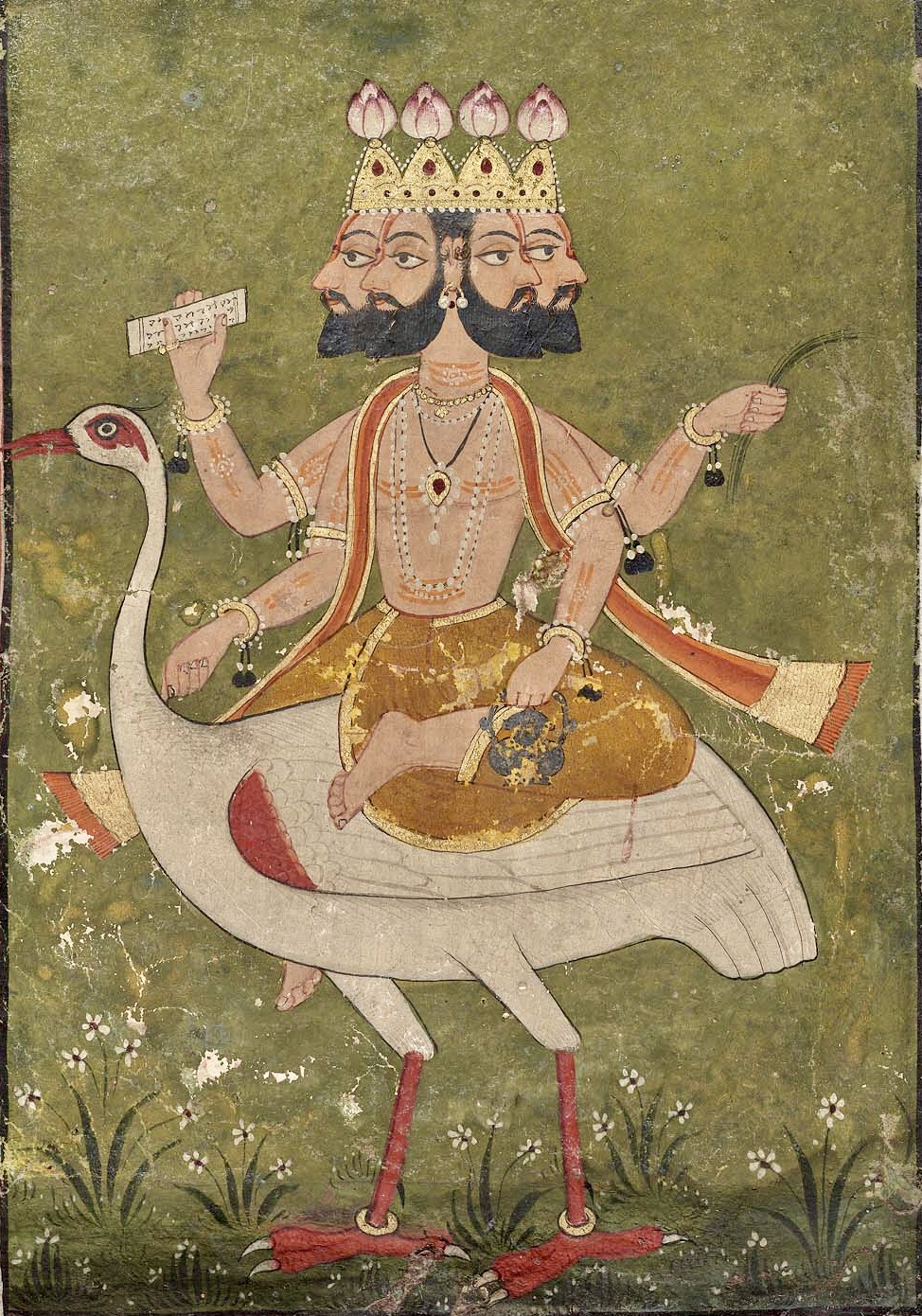
Brahma on his vahana, Hamsa
One of the most powerful and most famous mantra is the Hamsa Mantra, Mantra of the with swan.
The sacred texts, one for all the Shivasutravirmasini, require that the mantra should be repeated 21,600 times.
The syllable ham is pronounced with inspiration and the syllable sa with exhalation. And since the two phases of respiration occupy about four seconds, the repetition of the mantra for 21,600 times covers a period of 24 hours, one day (86,400 seconds that is, in fact, 24 hours).
The word hamsa refers to wild goose or withe swan, among other things it is the vahana of Brahma and his wife Saraswati. 
That animal is the symbol of transcendent knowledge as it can with its flight to break away from the lake as well as the man has to succeed, with the continued repetition of the mantra to break away from the illusory world of maya.
The mantra is very important for the Vedanta philosophy because hamsa refers to the words so ham (I am that) that refers to the identification of individual atman with the supreme Brahman.
The repetition (japa) of this mantra ensures the achievement of the purushatra, the four aims of life dharma, artha, kama and moksha.


Il Mantra Hamsa

Brahma sul suo vahana, l'Hamsa
Uno dei mantra più potenti e più famosi è l’Hamsa Mantra, il Mantra dell’oca o del cigno
I testi sacri, uno per tutti lo Shivasutravirmasini, prescrivono che il mantra vada ripetuto 21.600 volte. 
La sillaba ham va pronunciata con l’ispirazione e la sillaba sa con l’espirazione. E poiché le due fasi della respirazione occupano circa quattro secondi, la ripetizione del mantra per 21.600 volte copre l’arco delle 24 ore (86.400 secondi cioè, appunto, 24 ore).
La parola hamsa fa riferimento all’oca selvatica, tra l’altro vahana di Brahma e di sua moglie Saraswati, simbolo della conoscenza trascendente in quanto riesce col suo volo a staccarsi dal lago così come l’uomo deve riuscire, con la protratta ripetizione del mantra a staccarsi dal mondo illusorio di maya.
Il mantra è molto importante per la filosofia vedanta perchè hamsa fa riferimento a ham so che significa io sono e che si riferisce all’identificazione dell’atman individuale con il supremo brahman.
La ripetizione (japa) di questo mantra assicura il raggiungimento dei purushartha dei quattro scopi della vita dharma, artha, kama e moksha.


domenica 25 marzo 2012

Purushartha, the aims of the life

The aims of the life of every person according to Indian tradition are four and are called purushartha (purusha = person, artha = aim). These are dharma, artha, kama and moksha. Each person in your own life has to achieve these goals.
Dharma is the duty, virtue, righteousness, behaving ethically according to the environment, nature and the circumstances in which the person is located. There is not a absolute moral, that works for everyone, there is a individual, particular moral, which varies according to the historical period, social class, the situation in which one lives. For this reason we speak of svadharma ie individual dharma.
The other purpose is artha, the attainment of material wealth, prosperity, the fulfillment of their work, establishing and maintaining a family.
The third human purpose is the desire, material pleasure, kama, satisfaction of the sensual world. In kama are all part of the pleasures related to the body, the satisfaction of hunger, thirst, sleep, sexual desire.
The ultimate purpose, the final aim the satisfaction of which interrupts the samsara, the cycle of rebirth, is moksha. Only a balanced person, who has got the other three purposes of life can achieve this goal, and certainly he cannot achieve it in one lifetime.
Moksha is freedom from desire, from the illusion of maya, ignorance of avidya. With moksha every individual existence ceases and the Atman merges with Brahman, which is sat-cit-ananda, existence-consciousness-bliss.


Purushartha, gli scopi della vita

Jaipur

Gli scopi della vita di ogni persona secondo la tradizione indiana sono quattro e sono detti i purushartha (purusha = persona, artha = fine). Si tratta di dharma, artha, kama e moksha. Ogni persona nella propria vita dovrebbe realizzare questi scopi.
Il dharma è il dovere, la virtù, la rettitudine, il comportarsi eticamente secondo l’ambiente, la natura e la circostanza in cui la persona si trova. Non esiste una morale assoluta, che vada bene per tutti, esiste una morale individuale che varia col variare del periodo storico, della classe sociale, della situazione in cui uno vive. Per questo si parla di svadharma ossia del dharma individuale.
L’altro scopo è l’artha, il raggiungimento del benessere materiale, il compimento del proprio lavoro, la costituzione e il mantenimento di una famiglia.
Il terzo scopo è il desiderio, kama, il soddisfacimento della sfera sensuale nel senso più ampio. In kama rientrano tutti i piaceri legati al corpo, la soddisfazione della fame, della sete, del riposo, del desiderio sessuale.
Lo scopo supremo, finale, lo scopo la cui soddisfazione interrompe il samsara, il ciclo delle rinascite, è moksha. Solo una persona equilibrata, che ha soddisfatto gli altri tre scopi della vita può raggiungere questo obiettivo e non può certo raggiungerlo in una sola vita.
Moksha è la liberazione dal desiderio, dall’illusione di maya, dall’ignoranza dell’avidya. Con moksha cessa ogni esistenza individuale e l’atman si confonde col brahman che è sat-cit-ananda, essere-conoscenza-beatitudine.


domenica 28 agosto 2011

Kama, il dio dell'amore


Kama insidia Shiva

Il demone Taraka era diventato troppo potente e minacciava gli dei ed il loro potere, doveva essere eliminato, ma grazie ad una concessione di Brahma, Taraka poteva essere ucciso soltanto dal un figlio di Shiva.
Il grande dio però, dopo la morte della moglie Sati, era in perenne meditazione, doveva essere svegliato dal suo stato affinché si innamorasse di Parvati e con lei avesse quel figlio che avrebbe salvato gli dei.
Kama, il dio dell’amore, viene allora inviato a distogliere Shiva dalla meditazione. Appena Kama giunge sul suo pappagallo i fiori sbocciano, il clima si fa mite, l’aria è intrisa di profumo. Kama è infatti sempre accompagnato da Vasant e dalla sua sposa Rati (Desiderio o Lussuria), il Signore della primavera. Shiva resta in meditazione, Kama prende il suo arco fatto di canna di zucchero e con la corda, fatta di api, scocca una delle sue cinque frecce ciascuna delle quali al posto della punta ha un fiore.
Shiva si risveglia dalla sua meditazione ed apre il suo terzo occhio che incenerisce in un sol colpo Kama.
Rati, la sposa di Kama, disperata si cosparge il corpo con le ceneri del marito ed implora Shiva di farlo tornare in vita.
Il grande dio, commosso, promette a Rati che Kama rinascerà come Pradyumna, figlio di Krishna e Rukmini.
Kama è il dio dell’amore. Molti saggi sono stati distratti nelle loro meditazioni ed austerità da questo dio, spesso inviato da Indra proprio a distogliere gli umani che si avvicinavano troppo alla divinità.
Nasce da se stesso o è figlio di Dharma e di Shradda, in altre tradizioni è figlio della dea Lakshmi. Sul suo vessillo rosso è dipinto il pesce Kamara ed il sua vahana è un pappagallo.
E’ chiamato anche Smara (Ricordo), Dipaka (L’infiammatore), Manmatha (Colui che turba lo spirito), Ishma (il possessore di frecce),  Mada (Ebbrezza), Shamantaka (Distruttore della pace).
Kama (काम), in sanscrito, significa amore, amare si dice kamayati (कामयति) e "io ti amo" si dice "tvam kamayami" (त्वां कामयामि).
Prima di essere il dio mitologico dell’amore, Kama è un importante concetto metafisico che compare già nei Veda. E’ il desiderio, il motivo per cui l’Uno indistinto si fece molteplice (cfr. post).
Il bellissimo inno del Rig Veda (X, 129) che narra dell’inizio dei tempi  ci ricorda come Kama, cioè il desiderio, fu il germe originale della creazione e in tal senso è Aja, cioè Non nato, e Ananyaja cioè Nato da nessun altro o anche Atmabhu, l’esistente di per se stesso. L’Atharva Veda invece lo chiama ‘motore della creazione’ e ‘primo nato’.
Kama è anche uno dei quattro purusartha, gli scopi che ogni uomo deve perseguire durante la sua vita terrena che sono dharma, cioè la rettitudine morale, artha, cioè il benessere materiale, kama appunto, cioè la soddisfazione dei desideri ed infine moksha, cioè la liberazione dal samsara, il ciclo delle rinascite.

Kama, the God of love

Kama on his parrot
The demon Taraka had become too powerful and threatening the gods and their power. He had to be eliminated, but thanks to a grant of Brahma Taraka could be killed only by a son of Shiva.
The great god, however, after the death of his wife Sati, was in perpetual meditation, had to be woken from his state to fall in love with Parvati and to generate with her a son who would save the gods.
Kama, the god of love, is then sent to distract Shiva from meditation. Kama just come on his parrot flowers bloom, the weather is mild, the air is full of perfume. Kama is in fact always accompanied by his wife Rati (Lust or Desire) and Vasant, the Lord of the spring. Shiva is in meditation, Kama takes his bow made of sugar cane and by the rope, made of bees, he strikes one of his five arrows each of them instead of the tip has a flower.Shiva from his meditation awakens and opens his third eye that incinerates Kama in one fell swoop.Rati, Kama's wife, desperate sprinkle the body with the ashes of her husband, and implored Shiva to bring him back to life.
The great god, moved, promises that Kama reborn as Pradyumna, son of Krishna and Rukmini.
Kama is the god of love. Many shadu have been distracted in their meditations and austerities by this god, often sent by Indra to distract the humans who just got too close to the deity.
He was born from himself or he is the son of Dharma and Shradda, in other traditions he is the son of the goddess Lakshmi. On his red banner is painted the fish Kamara and his Vahana is a parrot.
He i salso called Smara (Memory), Dipak (Inflammation), Manmatha (the one who disturbs the spirit), Ishma (the owner of arrows), Mada (Drunkenness), Shamantaka (Destroyer of peace).
Before being the mythological god of love, Kama is an important metaphysical concept that already appears in the Vedas. He is the desire, why the One became indistinct multiple (see post).
The beautiful hymn of the Rig Veda (X, 129) which tells the beginning of time reminds us as Kama, the desire was the seed of the original creation and in this sense he is Aja, that is not born, Ananyaja, Born from nobody, Atmabhu, the existing by itself. The Atharva Veda instead calls him 'Engine of creation' and 'First Born'.

Kama  (काम) in sanskrit means love, to love is kamayati (कामयति) and "I love you" is "tvam kamayami" (त्वां कामयामि).
Kama is also one of the four purusarthas, the goals that every man should pursue during his earthly life: dharma, or moral rectitude, artha, or material wealth, kama, that the satisfaction of desires and finally moksha, or liberation from samsara, the cycle of rebirth.

domenica 26 giugno 2011

The death of Swami Nigamananda against Ganges pollution

Ganges - Varanasi
It's been four months that he was fasting. Swami Nigamananda died June 13 at the age of 34 years to the hospital in Dehradun.
Nigamananda was fasting to protest against rampant corruption in India, against plans to uncontrolled exploitation of the ground in Uttarakhand and especially against the pollution of the Ganges, whose sources are located in this state in northern India.
Nigamananda had left home in 1995 to become a sannyasa, renouncer,  and engage in search of self. He lived at the ashram of Matra Sadan and was a recognized throughout India guru.
He had started his non-violent form of protest the February 19 against   illegal and systematic exploitation of mines in the Ganges.
This is an illegal system that produces huge profits and live thanks to collusion, connivance and corruption of all state apparatuses: the government, ministers, the forester, the police. Opponents will be deleted.
Political parties accuse each other and try to exploit the great amount of publicity that the event has had in India. The Congress Party accuses the BJP, the Hindu fundamentalist party in government in that state, which contends that the projects against which Nigamananda struggled existed during the administration of the Congress Party.
On the death of the spiritual leader has also opened a judicial inquiry as some say that the guru was even poisoned while others argue that he has not been properly cared for during the hospitalization.
Swami Nigamananda, whose karmic residue was exhausted and therefore did not need to be burned on the funeral pyre, was buried in the position of the padma asana, as the gurus who have made the moksha in this life that is stopping the samsara or cycle of of rebirth.


To go into


Morte di Swami Nigamananda contro l'inquinamento del Gange

Gath sul Gange a Varanasi
Era da quattro mesi che faceva lo sciopero della fame. Swami Nigamananda è morto il 13 giugno all’età di 34 anni all’ospedale di Dehradun.
Nigamananda scioperava per protestare contro la corruzione dilagante in India, contro i progetti di sfruttamento selvaggio del suolo nello stato dell’Uttarakhand e soprattutto contro l’inquinamento del Gange le cui sorgenti sono poste proprio in questo stato dell’India settentrionale.
Nigamananda aveva lasciato la propria famiglia nel 1995 per divenire sannyasin, rinunciante, e dedicarsi alla ricerca del Sé. Viveva presso l’ashram di Matra Sadan ed era un guru riconosciuto nell’intero territorio dell’IndiaAveva cominciato la sua forma di protesta non violenta il 19 febbraio contro l’illegale e sistematico sfruttamento delle miniere presso il Gange. Si tratta di un sistema illegale che produce profitti enormi e vive grazie alla collusione, alla connivenza e alla corruzione di tutti gli apparati dello stato: dal governo ai ministeri interessati, dalla guardia forestale alla polizia. Chi si oppone viene eliminato.
I partiti si rimpallano la responsabilità e cercano di sfruttare il grande clamore che l’evento ha avuto in India. Il Partito del Congresso responsabilizza il BJP, il partito integralista hindu al governo in quello stato, il quale replica che i progetti contro cui Nigamananda lottava esistevano anche durante l’amministrazione del Partito del Congresso.
Sulla morte del leader spirituale è stata anche aperta un’inchiesta giudiziaria in quanto c’è chi sostiene che il guru sia stato addirittura avvelenato altri invece sostengono che non sia stato adeguatamente curato durante il ricovero all’ospedale.
Swami Nigamananda, il cui residuo karmico era esaurito e pertanto non aveva bisogno di essere bruciato sulla pira funebre, è stato sepolto nella posizione del padma asana, come i guru che hanno realizzato in questa vita terrena il moksha l’interruzione cioè del samsara o ciclo delle rinascite.


Per chi vuole approfondire


lunedì 17 gennaio 2011

Brahman and Atman

I think that the crucial element of all philosophical speculation of Hinduism is the identity between Atman and Brahman, between individual self or soul and universal self.
According to Hinduism every human being has within himself, in the more secret part of his heart, this spirit and this is nothing but a small part of the universal spirit, this is him, the same thing.
In Chandogya Upanishad you can read: "The light which shines above us, above all things, above the universe, above every world and above which there is no more, this light is that same light that shines inside us"
(III, 13, 7). And again, "this Self within my heart, smaller than a grain of rice, than a grain of barley, than a grain of mustard seed, than a grain of millet, this Self that is within my heart is greater than the earth, greater than the space, greater than the sky, greater than all the worlds……this Self that is within my heart, this Self is the Brahman” (Ch. Up. 3, XIV 3-4).
Contrarily to the thought of other religions, Hinduism does not believe that the Atman is something inextricably tied to the individual to whom it refers, it is not believed to be born with the birth of each human being, it is the Being, it has always been considered existing. So  the Being cannot be created because otherwise it would mean that before it was not and this is a contradiction in terms. The Atman isn’t the soul as well as christian tradition sees it.
In a beautiful piece of the Bhagavad Gita you can read: "the Atman that is inside every man is not born, it never dies, Being, it will never cease to be. It is innate, necessary, eternal, primordial, it doesn’t die when the body dies " (Bhagavad Gita II, 20).
The Universal Spirit, the Supreme Being, Brahman, is the only real and actually existing thing, because the reality that man knows is usually transitory, passing, changeable and what is changing can not be considered real. This is why according to Hinduism, especially to Vedanta, it is argued that the commonly perceived reality is nothing but Maya, illusion.
Given this background, we understand perfectly well that the goal of each one is to have the knowledge, the experience of Brahman which is inside us. This means being able to understand that "tat tvam asi" or "I'm the that" (Chandogya Upanishad VI, 8, 7). The deepest aspiration of Hinduism is to feel the presence of God or Brahman in themselves.
In this way, as all rivers join the ocean, so Atman will join the Brahman too and Atman will be indistinguishable (Prasna Upanishad VI, 5), putting a stop, by what is called moksha, to samsara that is the cycle of rebirth.
The instruments indicated by the Hindu reflection to achieve this are many and vary with the times, situations, contexts and people, but meditation has a central role. Those who think that rituals, sacrifices, good deeds or the study of texts is the road to liberation will be condemned to be reborn, but who is dedicated to asceticism and remains free of passions and desires reaches the Supreme Brahman (Mundaka Upanishad II, I, 11-12).
The religious experience of Hinduism is essentially an intimate experience of the trascendental reached by meditation and ascetism; dogmas, beliefs, rituals, prayers are only one stage more or less back on spiritual individual path.
Man is the fortress with eleven doors, all facing outwards to the changing and deceptive reality. Man has to close these doors and, free from desires, must open the third eye, the eye of wisdom, the eye that is at the center of our forehead and which sees inside of us and not outside.
"Some wise men, wishing for immortality, turning their gaze towards themselves, they saw within themselves the Atman" and cut all the ties that held them enthralled, those mortals became immortal (Katha Upanishad 1, IV,1).
Once man could perceive, have experience of this identity, the man leaves the world of illusions, the reality of opposites (good/evil, pleasure/pain, good/bad) reaches the source of all joy and is saved from slavery death. "By pondering on the Self, by joing it, by identifyng with it, every illusion shall cease" (Svetasvatara Upanishad I, 10-11).


Italiano

Brahman e Atman

Reti cinesi a Cochin (Kerala - India)
Mi pare che l’elemento cruciale di tutta la speculazione filosofica dell’induismo sia l’identità tra Atman e Brahman, tra Sè individuale e Sè universale.
Secondo l’induismo ciascun essere vivente ha dentro di sé, nella parte più segreta del proprio cuore questo spirito che non è altro che una piccola parte dello spirito universale, è lui, è la stessa cosa.
Si legge nella Chandogya Upanishad, “quella luce nel cielo che splende al di sopra di noi, che brilla al di là di tutto, al di là dell’universo, nei mondi superiori e oltre ai quali non vi è più nulla, questa luce è quella stessa luce che risplende dentro di noi” (III, 13, 7). E ancora, “questo Sé dentro il mio cuore, che è più piccolo di un chicco di riso, di un granello d’orzo, di un seme di senape, di un grano di miglio, questo Sé che è dentro il mio cuore è più grande di tutta la terra, più grande dello spazio, più grande del cielo, più grande di ogni altro mondo….. questo Sé che è dentro il mio cuore è lo stesso Brahman” (Ch. Up. 3, XIV 3-4).
A differenza di quanto pensato da altre religioni, l’induismo non crede che l’Atman presente in ogni individuo sia qualcosa di indissolubilmente legato all’individuo cui si riferisce, non si crede che nasca con la nascita di ciascun essere umano, esso è l’Essere, è da sempre esistente, infatti l’Essere non può essere creato, non può nascere perché altrimenti significherebbe che prima non era e questa è una contraddizione in termini. L’Atman non è l’anima così come intesa dalla tradizione cristina.
In un brano molto bello della Bhagavad Gita si legge, "lo Spirito che è dentro di noi mai nasce nè muore; non è stato, non sarà di nuovo. Esso, che è innato, necessario, eterno, primordiale, non muore quando muore il corpo (Bhagavad Gita II, 20).
Lo Spirito universale, l’Essere Supremo, il Brahman, è l’unica cosa reale ed effettivamente esistente, in quanto la realtà che l’uomo abitualmente conosce è transitoria, provvisoria, mutevole e ciò che è mutevole non può essere considerato reale. Per questo nell’induismo, soprattutto nel vedanta, si sostiene che la realtà abitualmente percepita non è altro che maya, illusione.
Tenuto conto di queste premesse si capisce perfettamente che l’obiettivo di ciascuno è quello di avere la conoscenza, l’esperienza del Brahman che è dentro ciascuno di noi. Ciò significa riuscire a comprendere che “tat tvam asi” ossia “io sono quello” (Chandogya Upanishad VI, 8, 7). La più profonda aspirazione dell’induismo è cioè la realizzazione della presenza di Dio o del Brahman in se stessi.
In questo modo, come tutti i fiumi si uniscono all’oceano, così anche l’Atman si unirà al Brahman e sarà da lui indistinguibile (Prasna Upanishad VI, 5), ponendo fine, con quello che è chiamato moksha, al samsara cioè al ciclo delle rinascite.
Gli strumenti indicati dalla riflessione induista per raggiungere questo obiettivo sono molteplici e variano al variare delle epoche, delle situazioni, dei contesti e della persona, ma la meditazione ha un ruolo centrale. Chi pensa che il rito, il sacrificio, le buone azioni o lo studio dei testi siano la strada per la liberazione saranno condannati a rinascere, colui invece che si dedica all’ascesi e resta privo di passioni e desideri raggiunge il supremo Brahman (Mundaka Upanishad II, I, 11-12).
L’esperienza religiosa nell’induismo è essenzialmente esperienza intima del trascendente, raggiunta attraverso la meditazione, l’ascesi e non i dogmi, le credenze, i riti, le preghiere che rappresentano soltanto uno stadio più o meno arretrato nel cammino spirituale dell’individuo.
L’uomo è la fortezza dalle 11 porte, tutte rivolte verso l’esterno verso la realtà mutevole e ingannevole. Queste porte devono essere tutte chiuse e l’uomo, libero da desideri, deve aprire il terzo occhio, l’occhio della saggezza, l’occhio che sta al centro della nostra fronte e che si rivolge all’interno di noi e non al di fuori.
“Alcuni saggi – si legge nella Katha Upanishad (1, IV, 1) – desiderosi dell’immortalità rivolgendo lo sguardo verso se stessi, videro dentro di sé l’atman” e, tagliati tutti i legami che li tenevano avvinti, quei mortali divennero immortali.
Una volta che riuscito a percepire, ad avere esperienza di questa identità, l’uomo abbandona il mondo delle illusioni, la realtà degli opposti (bene/male, piacere/dolore, bello/brutto) raggiunge la fonte di ogni gioia e si salva dalla schiavitù della morte. “Meditando sul Sé – dice la Svetasvatara Upanishad (I, 10-11) - a questi congiungendosi, identificandosi con lui, cessa ogni illusione.”

English