Visualizzazione post con etichetta Mahavakya. Mostra tutti i post

domenica 15 luglio 2012

I quattro Mahavakya

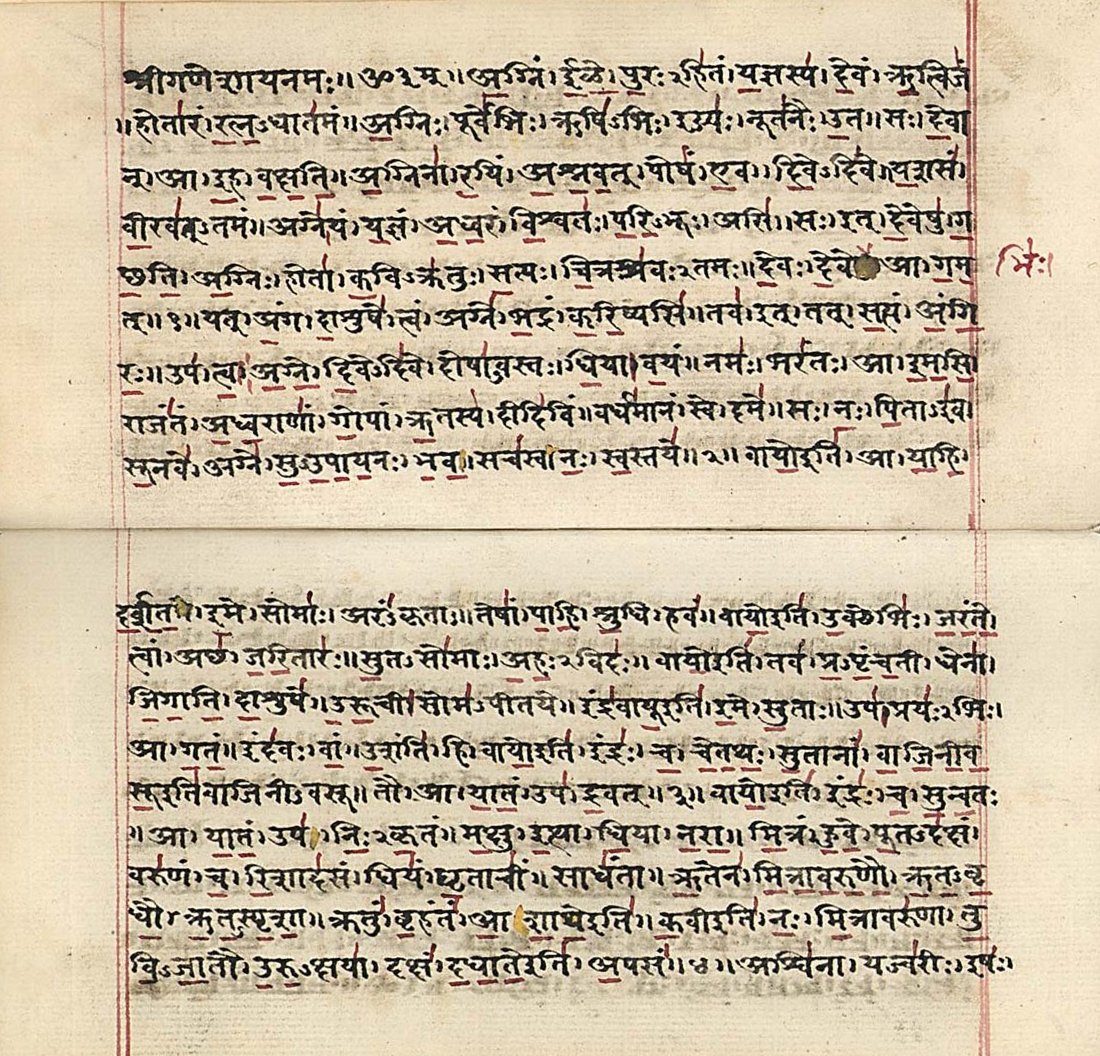
Pagine del Rig Veda
Sono i mahavakya ossia grandi detti, i quattro aforismi vedici, quattro espressioni sanscrite che sintetizzano la dottrina del Vedanta Advaita, il Vedanta non dualista, che ritiene che la realtà sia una ed una soltanto cioè il Brahman col quale si identifica anche l'anima individuale.

Tat tvam asi, cioè Quello sei tu (Chandogya Upanishad VI, 8, 7)
Aham brahmasmi significa Io sono il Brahman (Brhadaranyaka Upanishad I, 4, 10)
Ayam atma brahman ossia Questo Sè è il Brahman (Mandukya Upanishad II)
Prajnanam Brahma cioè Il Brahman è pura coscienza (Aitareya Upanishad V, 4)

Mentre i primi tre esprimono il concetto dell'identità tra Spirito individuale (Atman) e Spirito universale (Brahman), il quarto indica la natura del Brahman come pura coscienza, priva di oggetto, modificazione e dualità.
La conoscenza di questa non-dualità, di questa identità è il mezzo per ottenere moksha, cioè la liberazione dal samsara, il ciclo delle rinascite.
I Mahavakya vengono anche recitati come mantra.

Mahavakyas

Rig Veda
They are the Mahavakyas, the Great sayings, the four Vedic aphorisms, four Sanskrit sentences which sum up the doctrine of Advaita Vedanta, Vedanta non-dualist, which believes that reality is one and only one, that reality is Brahman with whom also the individual soul identifies.

Tat tvam asi means You are that (Chandogya Upanishad VI, 8, 7)
Aham Brahmasmi means I am Brahman (Brhadaranyaka Upanishad I, 4, 10)
Ayam atma brahman, This Self is Brahman (Mandukya Upanishad II)
Prajnanam Brahma ie Brahman is pure Consciousness (Aitareya Upanishad V, 4)

While the first three sayings express the concept of identity between the individual spirit (Atman) and the Universal Spirit (Brahman), the forth one indicates the nature of Brahman as pure consciousness, devoid of purpose, modification, and duality.
The knowledge of this non-duality, this identity is the means to achieve moksha, or liberation from samsara, the cycle of rebirths.
The Mahavakyas are used as mantras too.