Visualizzazione post con etichetta Etymologies. Mostra tutti i post

sabato 24 maggio 2014

Etymologies: yoga and diksha

Hindu ritual
Yoga,  word used and abused in the West, is derived from the Sanskrit root yuj, which indicates terms such as union, bond, subjugate. For this yoga is "what binds the individual to the universal, the atman to the brahman, but it also what subdues the senses to allow this union.
Yoga is not only, as is believed in the West, a physical practice that includes a series of asanas (postures) for the well-being of the body. Yoga is one of the six orthodox darshana, philosophies or points of view of the Hinduism.
This doctrine is divided into eight disciplines, it speaks of the 'Eightfold Path', one of which is the one of the asanas or positions.
Understood in the sense of "practice" there are many types of yoga.
Another key word of Hinduism is diksha (or deeksha), which indicates the initiation, the moment when the boy of the three upper castes is introduced to the teachings of the guru (see etymologyor the ceremony of initiation into a particular Hindu discipline, with particular reference to Tantrism.
The deeksha is to be celebrated by a guru who whisper in the ear of the disciple the mantra (see etymology) that the young bring with him self and will repeat throughout his life. Without having received initiation, you can not even listen to certain teachings of the guru.
The etymology of diksha is not unique. Some people derives from the Sanskrit root  da which means to give and from the root kshi which means to destroy. In this sense, the term diksha refers to the destruction of life and the gift of another one, a kind of rebirth that is confirmed by the fact that members of the three upper castes are called after initiation dvija ie, twice-born.
Other etymology of the word diksha derive from the root diks which means to consecrate or to dedicate.


domenica 19 gennaio 2014

Etymologies: darshana

Darshana is a very important word in Hinduism. It literally means eye contact, and vision, it comes from Sanskrit 'drs'which means to see, to observe .In Hindu practice darshana is the eye contact, the vision with the divine or with the saint, the guru. In Hindu temples the faithful people go in front of the tabernacle in order to have the darshana with the god, you wait several hours to see the image of God which is removed from garbhagrha, the holiest of shrines in the temple just to be shown to the faithful people waiting with the deity or guru.

But the word darshana is also to indicate the six doctrines, orthodox Hindu philosophical visions. 
They are: Sankhya, Yoga, Vaiseshika, Nyaya, Mimamsa and Vedanta.
For many these visions are not in contradiction but rather points of view, ' proofs ' that start from the same start, the Vedas, and they lead to the same goal, moksha, the union of atman with Brahman, the individual soul with the universal soul breaking samsara, that is, the cycle of rebirths.

sabato 18 maggio 2013

Satyagraha

Gandhi wasn't to coin the word satyagraha, but a relative of his, Maganlal Gandhi who responded to the invitation of the same Mahatma find a word more representative of passive resistance for the movement and the struggles of Indians in South Africa.
Maganlal proposed Sadagraha which Gandhi then changed to Satyagraha.
Satya is a Sanskrit word that comes from the root sat and essentially indicates the verb to be and, consequently, the true real, what does not change, that is the Truth, and ultimately God.
Agraha instead refers to a concept of perseverance, firmness, can be translated as insistence on something, or likely to be stubbornly attached to something.
The word Satyagraha, therefore, can be translated as firmness in truth, obstinate defense of the truth or, in the words of Gandhi, "insistence on truth, and force derivablefrom such insistence."
The satyagraha, is "the force that is born from truth and love."
Satyagraha is not a technique, or a movement, or a tool, for Gandhi's satyagraha is a preparation of the own soul.
To implement the satyagraha is therefore necessary first to act upon themselves. "Satyagraha - Gandhi reminded - is the complete annihilation of self, the greatest humiliation, greatest patience and faith brighter."
In perfect keeping with the Hindu thought, Gandhi knows that the truth is not in the I and in my and therefore to reach the Truth and be steadfast in the truth, you must cancel the ego and his every desire.
First rule of satyagraha is therefore self-discipline: domestic relations, diet, individual behavior must all be characterized by the abandonment of the ego, desire and hatred towards others.
"We have to have strict self-control - Gandhi says - if it is necessary for this preparation to live in forests and caves, we should do so."
After, the satyagraha can move in social relations and in the political struggle where its real purpose is the inner transformation of the opponent.
"A satyagrahi - Gandhi says - is already dead in the body before the enemy tries to kill him, that is freed from attachment to their own bodies and lives only for the victory of the soul." Of what use then kill a man already dead?
The opponent who sees this patience, this capacity to suffer for the truth, this self-annihilation in the affirmation of truth, this acceptance of the hardest consequences (even the prison or even his own death) to remain "steadfast in the Truth", leads to final victory, indeed it is already in itself a victory, in a reversal of perspective that displaces the opponent and, eventually, change him and wins him.
"In the satyagraha - reminds us of the Mahatma - the defense of truth is not inflicting suffering opponent, but to themselves."


domenica 28 aprile 2013

Tirthas, the sacred places of Hinduism

"The sanctuary holiest of all sanctuaries, the most sacred of all tirthas is meditation on Brahman, control of the senses, inner discipline and purity of heart."

Garudapurana


Ganges, Varanasi: a hinduist thirtha
They are called tirthas, are the holy places of Hinduism. Those can be a river, a tree, a mountain. In these places the Hindu devotees go on pilgrimage because those are the places favorable to devotion.
Tirtha in Sanskrit means ford, passage, path, it is the door leading from one state to another, is the tool to get what you want. Even a temple is a tirtha.
Some tirthas are indicated for the cult of the deads and a step of the pilgrimage that leads to the sacred tirtha of Gaya is an important step for the soul of the deceased to the skies. Other tirthas are given to wash away the sins, others to propitiate a good marriage, and others to achieve moksha, liberation from the cycle of rebirth. One of these is Prayag, near Allahabad, where the Ganges joins the Yamuna, 'the pubis of the earth', Varanasi is also a sacred tirtha,  the soul of one who dies here gets immediately moksha and the union with Brahman.
But it isn't enough to go on a pilgrimage to a tirtha, you must follow the specifications of the sacred books which provide meticulously clothing, the time, the need or otherwise of the tonsure of the hair, the height of the stick, the rites to be performed, the songs to be sung.
The Kurmapurana for example, recalls that "it will not bring any fruit the pilgrimage to a tirtha done using a vehicle or bragging or impatience".
But Garudapurana at the beginning of this post reminds us that the tirtha par excellence, the holiest of holy places is there, where the God hid a small part of himself, the man's heart.

domenica 6 gennaio 2013

Etymologies: Sutra

Generally, the word sutra means aphorisms and manuals, mostly philosophical but not limited to, written by the great sages of Hinduism after the Upanishads
Among all remember the Brahmasutra, that the Book of Brahman, the basic text of the Vedanta, Yogasutra by Pantnjali of the Book on the philosophy of Yoga, but also the Kamasutra of Vatsyayana, the Book on love and loving behavior (kama in Sanskrit means love and Kama is the god of love). Generally they consist of aphorisms, short phrases, lines, formulas sutra just, for the storage of pupils.
From an etymological point of view, sutra means string and comes from the root syu / siv, from which the Latin suere (sewing), suture (stitching), english to sew.
Most likely, the great treatises of Hinduism are called sutras, or strings, because at the time they were written on palm leaves and papyrus, which were then held together with just a thread.
And sutra is one of the names given to the string that the Brahmans lead to shoulder for life after the celebration of the sacrament or Upanayana samskara, which marks the second birth for those born in the upper castes.

sabato 13 ottobre 2012

Etymologies: ayurveda, dharma and samsara

Ayurveda is the traditional Indian medicine which dates back to 5,000 BC. Brahma revealed that to Prajapati. 
File:Sanskrit Devanagari.png
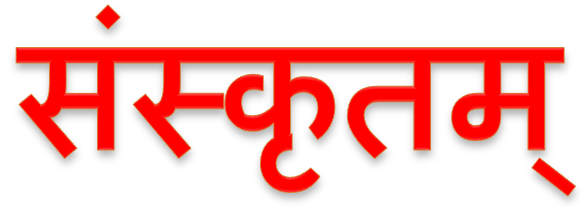
The word 'sanskrit' in devanagari script
The word ayurveda consists of the word ayus and the word veda. The word veda we met many times and it means knowledge. The more complex is the etymology of the word ayur
We can say that it means life, understood in a very broad sense as everything about living being from his birth to his death: body, senses, mind. So Ayurveda is the science of life, the science of well-being of the living being from his birth to his death. 
Dharma instead is usually translated as religion, morality, rules, virtues. In fact the word comes from the Sanskrit root dhr meaning to support, maintain, operate. Dharma is in fact the universal order, the universal balance, what makes things be as they are. 
Dharma is the essence of all being and the well is to respect the dharma that is, be yourself, its opposite, that is non-compliance with universal law, is adharma
Instead samsara is the cycle of rebirth which is interrupted by the liberation, moksha
Samsara means in fact wandering through, succession of states and its etymology derives from the Sanskrit prefix sam denoting a concept of completeness and the root sr indicating motion verbs such as to run, pass, glide.

sabato 2 giugno 2012

Etymologies: karma, atman, brahman and avatar

The Sanskrit word 'karma' means action essentially. Karma is generally understood as the result of the action or thought, positive or negative result of each behavior and focus of the theory of samsara, the cycle of rebirths. We can generally say that  when the soul leaves the body will reincarnate in a lower or higher being depending on the previous karma. When the karmic residue will be depleted, the atman is free (moksha). Karma is often understood as fate.
The word 'sanskrit' in devanagari

More uncertain is the etymology of the word 'atman', another key word of Hinduism. It is often likened to the soul, but really the atman is the Supreme Self, is the essence of every living being, is the Absolute in us that has nothing to do with our personal and individual soul which in Sanskrit is jiva. Perhaps the word from Sanskrit an (to move) and at (breathing), atman being the breath which moves, gives life to every living being. 
The 'brahman' however, not to be confused with  Brahma one of the three gods of the Trimurti, is the universal principle, the essence of supreme, absolute, pure metaphysical reality. The word is derived from the Sanskrit root brh, which stands for growth and development. In fact everything is born from Brahman and everything is a manifestation of it. 
'Avatara' means descent and derives from the Sanskrit root tr / tar 'go' and ava which means 'down'. Then Avatar is going down, down to earth. The avatars are in fact the incarnations of deities with particular reference to the incarnation of Vishnu.

domenica 11 marzo 2012

Etymologies: putra, guru and mantra

The word “son” in Sanskrit is “putra” (in alfabeto devanagari पुत्रand it is very significant. “Putra” is composed by “put” and “tra.” “Put” in Sanskrit is a particular hell in Hinduism and “tra” means “to defend”, “to deliver.” The son is he who saves from this hill and in fact he is called “putra.” For this reason in India it is very important to have a son, a male child who will set fire of the funeral  pyre of his father (see here).
The word "sanskrit" in devanagari
An other word whose etymology is very interesting is “guru” (in devanagari गुरु), the spiritual teacher without whom it is impossible reach the true knowledge. The guru is who gives to pupil his own mantra and teaches him the holy texts. “Gu” means  “darkness” or “shadow” and “ra” means “to disperse” and the guru is who disperses darkness and consents to his pupil to see the light of true knowledge. According another theory “ru” in Sanskrit means "light" and the guru is the one who brings his pupil from darkness to light.
Also the word “mantra” (in devanagari मान्त्र) has a very significant etymology. Mantras are mystical verses or magical formulas, composed of only one syllable or one word or a complete phrase. Mantras are repeated during the meditation. The word "mantra" in Sanskrit derives from the root "man" which means "mind" and "tra" which in this case is the suffix that designates the instrument. So the mantra is "instrument of thought", the means by which to think or, more correctly, to make work "manas", the instrument of knowledge.